
Biogenic Nanoparticles for Environmental Remediation: Applications in Soil and Water Detoxification
*Corresponding address: ejaz.r.hussain@gmail.com
Abstract
Industrialization, agricultural development, and urbanization have become the main causes of environmental degradation, leading to serious pollution of soils and water bodies worldwide. Conventional methods like chemical precipitation, adsorption, and thermal treatment are often costly and can have damaging effects on the environment in terms of introducing secondary pollutants. Nanotechnology has emerged as a promising approach for sustainable environmental applications in the recent years and in particular through the synthesis of biogenic nanoparticles using biological sources such as vascular plants, microalgae, bacterial cultures, and biomass comprising fungi. Nanoparticles that are biologically synthesized are considered to be eco-friendly, economically efficient, and relatively less toxic compared to the chemically synthesized ones. Biogenic nanoparticles have special physicochemical properties, which include high surface area, catalytic ability, and promote adsorption properties, making them especially useful in eliminating pollutants. This review systematically evaluates recent developments in the production, the mechanistic understanding, and the use of biogenic nanoparticles, which relate to soil and water remediation. The review discusses the benefits of synthesizing green nanoparticles over traditional syntheses, the issues that come along with these products, and the regulatory issues that crop up when these particles are used on a large-scale. Overall, biogenic nanoparticles represent a sustainable approach to addressing environmental pollution, which are potentially effective and can be implemented to improve the quality of the polluted soil and water systems.
Keywords: Biogenic nanoparticles, environmental remediation, green synthesis, nanotechnology.
Introduction
The growing industrialization, intensive farming, and unregulated urban development in recent years have led to the build-up of harmful pollutants in the environment. Pollutants such as heavy metals, dyes, pesticides, and pharmaceuticals remain in the environment because of their non-biodegradable nature and pose a significant threat to ecological and human health 1. Traditional methods of remediation, such as chemical precipitation, adsorption, ion exchange, and thermal processes, have been extensively used to remove pollutants 2. Yet, these methods are often costly, inefficient, and generate secondary pollutants, thus prompting the search for more environmentally friendly and effective alternatives 3.
Recently, nanotechnology has provided new opportunities for environmental remediation through the use of engineered nanomaterials 4. In particular, nanoparticles have gained significant interest for their unique characteristics, such as high surface area-to-volume ratio, increased reactivity, and surface functionalization 5. These properties allow nanoparticles to engage with various environmental pollutants to drive processes like adsorption, catalysis, and oxidation-reduction reactions 6. While these properties are highly desirable in nanoparticles, conventional chemical and physical processes for synthesizing nanoparticles can be energy-intensive, toxic, and unsustainable due to the generation of harmful by-products 7.
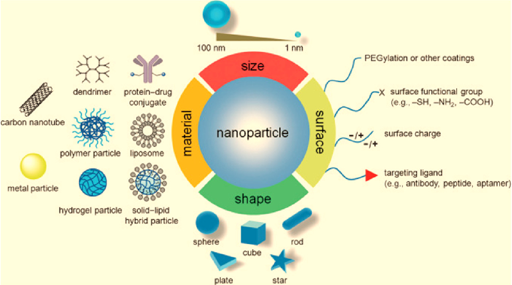
Fig 1: Schematic of nanoparticle classification based on material, size, shape, and surface properties influencing their functionality 8.
In an attempt to address these issues, green synthesis of nanoparticles has emerged as a viable alternative, in which biogenic nanoparticles are synthesized with biological systems like plants, microorganisms, and algae. This approach represents the integration of green chemistry and biotechnology to synthesize nanoparticles in an environmentally friendly, economical and sustainable way. Biomolecules such as proteins, enzymes, polysaccharides, and secondary metabolites, present in these systems, are essential in reducing metal ions and stabilizing nanoparticles, contributing to their increased stability and functionality. Crucially, biogenic nanoparticles are thought to be less toxic and more biocompatible than those prepared by chemical methods, rendering them environmentally safe.
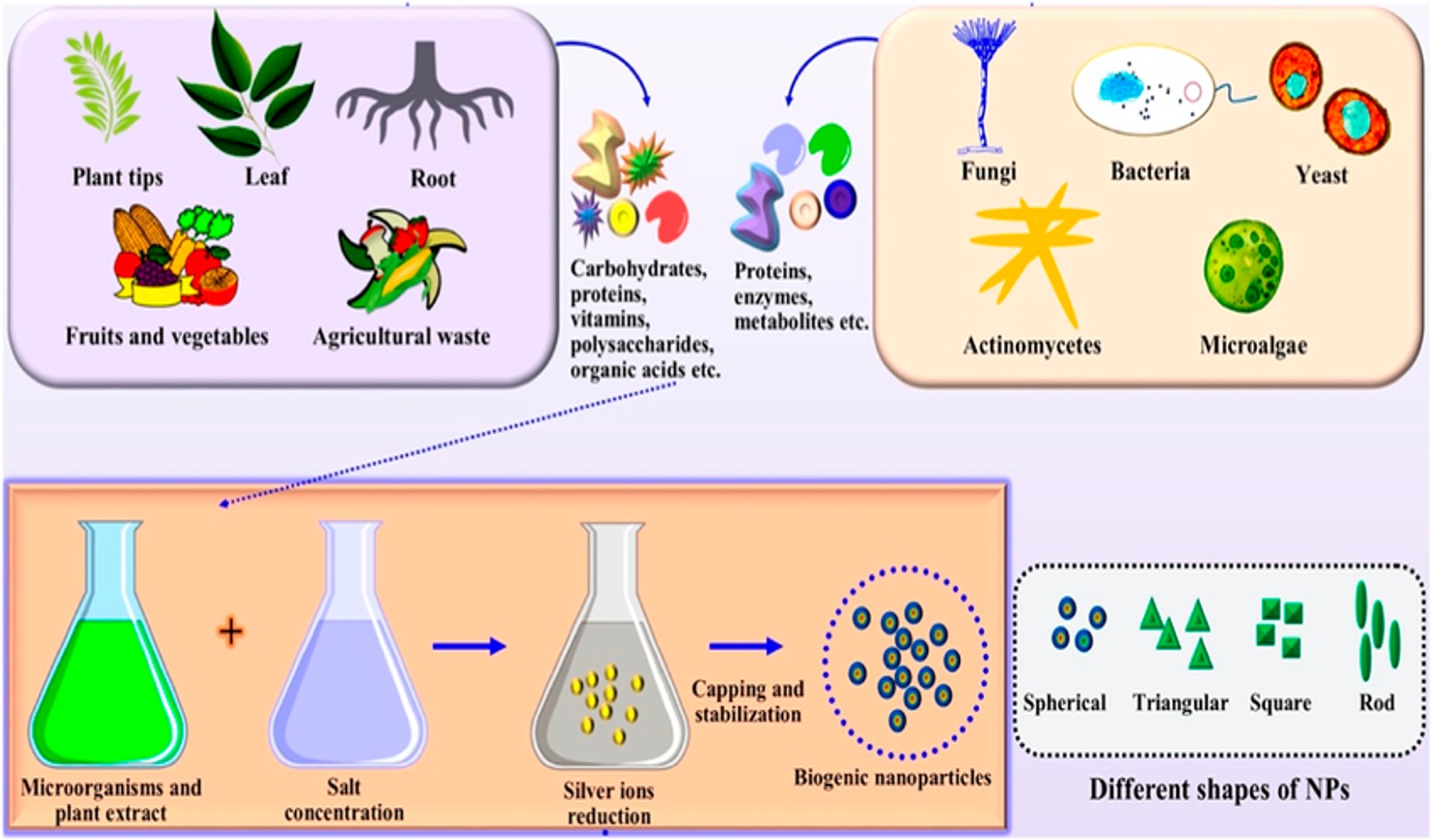
Fig 2: Schematic of green synthesis of biogenic nanoparticles using plant extracts and microorganisms, where biomolecules act as reducing and stabilizing agents to convert metal ions into nanoparticles of varied shapes depending on synthesis conditions 9.
Recently, biogenic nanoparticles have been increasingly used for environmental remediation, especially in the detoxification of soils and water bodies. Biogenic nanoparticles have shown excellent removal efficiency of heavy metals through adsorption and reduction, and organic pollutants via catalytic and photocatalytic processes 10. These nanoparticles can simultaneously remove different types of pollutants, underscoring their effectiveness in heterogeneous environments 11. Recent research has also highlighted their function in increasing the bioavailability of the pollutants and their interactions with microbes, thus improving the efficiency of remediation. While these developments are exciting, there are some key issues that need to be resolved for the large-scale use of biogenic nanoparticles. Nanoparticle stability, recoverability, reusability, potential ecotoxicity, and the absence of regulatory guidelines still pose significant barriers to their practical applications 12.
Therefore, a critical assessment of synthesis approaches, mechanistic understanding, and application efficiencies is crucial for this field.
As such, the current review seeks to comprehensively evaluate and critically assess recent studies on the synthesis, characterization, and environmental applications of biogenic nanoparticles, focusing on their application in soil and water remediation. The review also examines the mechanisms involved in pollutant removal, compares their efficacy with conventional approaches, and addresses the challenges and opportunities for their large-scale implementation.
Green Synthesis of Biogenic Nanoparticles
Compared to conventional methods that often involve toxic reducing chemical agents and harsh conditions, biogenic synthesis involves the use of naturally occurring biological systems to facilitate nanoparticle formation 13. This transformation is in line with green chemistry principles and has been extensively studied in recent years for environmental remediation 14.
Plants are among the most widely studied biological systems for the synthesis of nanoparticles. Plant extracts originating from various parts of the plant such as leaves, roots and fruits contain a plethora of phytochemicals such as flavonoids, phenolic acids, alkaloids and terpenoids 15. They effectively function as both reducing and stabilizing agents in the nanoparticle synthesis process. Numerous research studies have reported efficient production of metallic nanoparticles including silver, gold, zinc oxide, and iron oxide nanoparticles using plant extracts 16. The growing popularity of plant-mediated synthesis can be linked to the simplicity of the process, fast reaction times and no requirement for stringent sterile conditions, which is especially significant for large-scale production.
Besides plants, microorganisms like bacteria and fungi have also been extensively used for nanoparticle synthesis 17. These microorganisms possess a natural metabolic ability to reduce metal ions to nanoparticles either intra- or extra-cellularly. These processes are generally mediated by enzymes, in particular, oxidoreductases. Bacterial strains of Bacillus and Pseudomonas have been reported for producing nanoparticles with specific shapes 18. However, fungal systems are generally preferred as higher biomass production and increased exoenzymatic activity can lead to higher yields and ease of separation. Therefore, fungal systems are often reported in environmental remediation studies, particularly in treating wastewaters 19.
Algal systems are also being investigated for nanoparticle synthesis due to the presence of a variety of biochemical components such as polysaccharides, proteins and photosynthetic pigments 20. Microalgae and macroalgae have been explored as reducing agents for metal ions and stabilizing agents for the formed nanoparticles 21. Recent research has emphasized the role of algal extracts in the production of nanoparticles, including silver and titanium dioxide, especially for their use in photocatalytic removal of organic pollutants 22. In addition, the use of biomass waste materials such as agricultural byproducts has emerged as a low cost and environmentally benign option, helping to improve resource efficiency and waste management 23.
The synthesis of biogenic nanoparticles is governed by intricate biochemical processes involving the interaction between biological molecules and metal ions 24. Typically, this involves the reduction of metal ions to elemental form, followed by nucleation and growth of nanoparticles. Biomolecules in the biological extracts not only aid in the reduction but also serve as capping agents, which stabilize the nanoparticles and prevent their agglomeration 25. The composition and concentration of these biomolecules play a crucial role in determining the size, shape, and surface characteristics of nanoparticles, which in turn affect their environmental applications 26.
Despite the increasing number of publications reporting the benefits of biogenic synthesis, some challenges still exist. Variability in the biochemical content of the biological extract, absence of standardized processes, and challenges in controlling size distribution of the nanoparticles may lead to inconsistencies between different research groups 27. Such challenges underscore the need for optimization and a deeper understanding of the mechanisms involved to facilitate reproducible and scalable synthesis of biogenic nanoparticles.
Characterization and Physicochemical Properties of Biogenic Nanoparticles
The effectiveness of biogenic nanoparticles in environmental applications depends on their physicochemical characteristics, which are evaluated via comprehensive characterization using state-of-the-art techniques 28. Through thorough characterization, not only is nanoparticle synthesis validated, but also vital information regarding their size and shape, crystalline nature, surface properties, and stability is obtained, which in turn affects their reactivity and effectiveness in removing pollutants 29.
Nanoparticle size and shape are key factors that determine their behavior. Microscopy techniques like scanning electron microscopy (SEM) and transmission electron microscopy (TEM) are commonly used to observe the structure and size distribution of nanoparticles 30. Many reports have suggested that biogenic nanoparticles generally have sizes ranging from 1-100 nm and display spherical, rod-like and irregular shapes depending on the source of biological materials and the synthesis methods employed 31. Nanoparticles with smaller sizes have a greater surface area per unit volume, leading to an increased adsorptive capacity and catalytic activity, which are essential for the removal of pollutants 32.
X-ray diffraction (XRD) is often used to examine the crystalline structure and phase of nanoparticles. This method allows for the detection of crystalline phases and successful reduction of metal ions to produce their corresponding nanoparticles 33. For example, biogenic synthesis of silver, zinc oxide and iron oxide nanoparticles by plant or microbes most commonly exhibits characteristic diffraction patterns associated with their crystalline structures. Crystallinity plays a significant role in determining the catalytic and photocatalytic properties of nanoparticles, especially in the degradation of organic pollutants 34.
The surface chemistry of nanoparticles is crucial to their interaction with pollutants. Fourier transform infrared spectroscopy (FTIR) is widely employed to detect functional groups on the surface of nanoparticles derived from the biomolecules used in their synthesis 35. These groups, such as hydroxyl, carbonyl and amine groups, serve as capping and stabilizing agents, and play an active role in the adsorption of pollutants such as heavy metals and organic compounds. The biomolecule-derived layers on biogenic nanoparticles differentiate them from their chemically produced counterparts and can improve their biocompatibility 36.
In addition to structural and compositional analysis, optical properties are often studied by UV-visible spectroscopy, a useful rapid technique for synthesizing nanoparticles 37. Characteristic surface plasmon resonance peaks, in the case of metallic nanoparticles, like silver and gold, indicate the formation of nanoparticles and can be used to infer the size and polydispersity of nanoparticles 38. Likewise, methods such as dynamic light scattering (DLS) and zeta potential measurements are used to determine the size distribution of the colloidal suspension and stability of nanoparticles. A larger zeta potential typically means greater dispersion stability of nanoparticles in water, which determines their activity 39.
Understanding the link between physicochemical characteristics and environmental behaviour is key. Large surface area, appropriate functionalization and particle size contribute to improved adsorption of heavy metals, as well as catalytic activity for organic pollutants 40. Additionally, the presence of biologically sourced capping agents can enhance nanoparticle dispersion, prevent aggregation and preserve active sites. However, differences in preparation methods and biological sources may result in variability in these properties, thereby impacting remediation performance.
In summary, characterization is the first step towards understanding and improving the performance of biogenic nanoparticles 13. A comprehensive assessment of their physicochemical properties is crucial for establishing links between parameters of synthesis and performance, and to support the development of soil and water remediation systems 41.
Mechanisms of Environmental Remediation by Biogenic Nanoparticles
The remediation potential of biogenic nanoparticles is largely driven by a combination of physicochemical interactions and catalytic reactions that allow for pollutant transformation, immobilization or remediation in contaminated systems 42. These processes are closely related to the composition, surface properties of the nanoparticle, as well as the surrounding environmental factors, and have been well-studied in research employing soil and wastewater treatment systems 43.
Adsorption is a key mechanism in the removal of pollutants and it is largely enabled by the high specific surface area and surface reactivity of nanoparticles 44. Biogenic nanoparticles have diverse functional groups on their surfaces originating from various biological molecules, including proteins, polysaccharides and phenolic compounds. These functional groups can act as binding sites that interact with metal ions via electrostatic and ionic interactions, complexation and/or ion exchange mechanisms 45. This allows heavy metals such as lead, cadmium, chromium and arsenic to be effectively bound to the surface of nanoparticles 46. Biologically derived iron oxide nanoparticles, for example, have been extensively reported for their high affinity for arsenic and chromium species in water, and are thus potentially useful for the remediation of contaminated groundwater 47.
Besides adsorption, oxidation-reduction reactions (redox reactions) are vital in the transformation of certain contaminants, particularly heavy metals that have variable oxidation states 48. Biogenic nanoparticles can mediate electron transfer reactions that transform toxic metal ions into less toxic or less soluble forms 6. For instance, the conversion of highly toxic and carcinogenic hexavalent chromium (Cr6+) to a less toxic trivalent chromium (Cr3+) form that can be more readily precipitated or removed is common. Such electron transfer reactions are typically facilitated by the nanoparticle substrate, in combination with biomolecules that improve the electron transfer pathways 49.
Another key process is the catalytic breakdown, notably of organic contaminants like dyes, pesticides and pharmaceuticals. Biologically synthesized metallic and metal oxide nanoparticles have shown significant catalytic activity in the degradation of complex organic compounds 29. This is particularly important in environmental applications for wastewater treatment, where recalcitrant organic pollutants are difficult to remove. Nanoparticles' catalytic efficacy is attributed to their surface chemistry and active sites, which facilitate the formation of reactive species that break down and decompose the pollutants 50.
One key mechanism here is photocatalysis, where nanoparticles are activated by light to produce reactive oxygen species (ROS) including hydroxyl radicals and superoxides. These active species can oxidize and degrade various organic pollutants to produce less harmful byproducts 51. Biogenic zinc oxide and titanium dioxide nanoparticles have been widely investigated for their photocatalytic performance in the degradation of dyes (e.g. methylene blue, rhodamine B) and pharmaceuticals in wastewater applications 52. The use of biological capping agents can also improve photocatalytic efficiency through better dispersion and a reduction in the recombination of electron and hole pairs 53.
In addition to these main processes, recent research has also shown the importance of biogenic nanoparticles in promoting synergy with microbial populations in polluted environments 54. In soils, nanoparticles can affect microbial processes by increasing the bioavailability of contaminants or serving as electron shuttles in microbial redox reactions 55. This can enhance biodegradation rates and enhance remediation efficiency, in complex environmental media where multiple processes take place.
Although these mechanisms have been proven effective, their efficiency can be affected by various environmental conditions such as pH, temperature, ionic strength, and the presence of other ions and organic matter 56. These factors can influence the stability, charge and reactivity of nanoparticles and consequently their effectiveness in practical applications 57. Therefore, a detailed understanding of these mechanisms under different environmental conditions is crucial for the effective application of biogenic nanoparticles in large-scale remediation.
Applications of Biogenic Nanoparticles in Soil and Water Remediation
The importance of biogenic nanoparticles can be demonstrated by their use in detoxifying soils and water bodies 10. Due to their distinct physicochemical characteristics and eco-friendly synthesis, such nanoparticles have been extensively studied for the removal of both inorganic and organic contaminants in a variety of environmental media 58.
Soil Remediation
Contamination of soils, especially by heavy metals and toxic organic pollutants, is a serious environmental issue as it affects food security and quality. Biogenic nanoparticles have also been shown to be useful for cleaning up contaminated soils 59. Many investigations have explored using biogenic iron oxide nanoparticles to immobilize metals such as arsenic, lead, cadmium and chromium in soils 60. These nanoparticles show high affinity towards metal ions, allowing them to immobilize them in less bioaccessible forms, which reduces their translocation into plants 61. This is especially important in the context of agriculture, where metal uptake in crops can have serious health implications.
Besides the remediation of heavy metal contaminants, biogenic nanoparticles have also been explored for the detoxification of organic pollutants, such as pesticides and hydrocarbons 10. Biogenic zinc oxide and silver nanoparticles have been shown to promote the degradation of pesticide residues, thereby facilitating the removal of these contaminants from soil. Additionally, nanoparticles can interact with soil microorganisms to promote biodegradation, either by improving the accessibility of pollutants or by serving as electron shuttles in microbial metabolic reactions.
However, the use of nanoparticles in soil environments must be carefully considered, as properties like soil type, pH and organic matter can affect the behavior of nanoparticles 62. Moreover, the long-term fate and potential ecotoxicity require more research to enable safe and responsible use.
Water and Wastewater Treatment
Contamination of water with heavy metals, dyes, drugs and other chemicals has spurred a significant amount of research into the development of nanoparticle-based solutions 1. Biogenic nanoparticles, in particular, have demonstrated promising results in tackling such problems because of their reactivity and water compatibility 13.
The most common of these applications is the removal of toxic metals from water via adsorption and reduction processes. Biogenically produced iron oxide nanoparticles have been well documented for the removal of both arsenic and chromium from water, while silver and gold nanoparticles have also been reported for interaction with metal ions 63. These nanoparticles have been shown to reduce the levels of pollutants to within acceptable limits, as demonstrated in many experimental studies 64.
Biogenic nanoparticles have also been extensively used for treating dye-polluted water 65. Methylene blue, rhodamine B, and congo red dyes are among the most stubborn and resistant dyes used in the textile industry 66. Biogenic zinc oxide and titanium dioxide nanoparticles have been extensively reported for the degradation of these dyes via catalytic and photocatalytic mechanisms 52.
In recent years, there has been a growing focus on the wastewater treatment of emerging contaminants, such as pharmaceuticals and personal care products 67. Research has demonstrated the ability of biogenic nanoparticles to break down or remove compounds like antibiotics and painkillers, which are typically challenging to remove from water using conventional treatment technologies 68. This suggests their potential uses in advanced wastewater treatment systems.
Despite these potential uses, there are issues associated with recovering and reusing nanoparticles after treatment 69. Their dispersed nature in water systems may make their recovery challenging, leading to concerns about potential secondary pollution 56. To overcome this challenge, approaches such as immobilizing nanoparticles on carrier materials or using magnetic nanoparticles have been investigated to facilitate recovery and reuse 70.
Advantages of Biogenic Nanoparticles over Conventional Remediation Methods
Traditional methods of environmental remediation such as chemical precipitation, activated carbon adsorption, ion exchange, and thermal processes have historically been used for soil and water remediation 2. Although these processes have proven effective in controlled laboratory settings, they have shortcomings including high costs, low pollutant removal efficiencies, secondary waste production, and loss of efficiency in complex and diverse environmental systems. In this regard, biogenic nanoparticles present an opportunity, with a number of unique advantages that are consistent with the need for effective and sustainable environmental solutions 13.
Perhaps the most noteworthy benefit of biogenic nanoparticles is their eco-friendly manufacture 71.
Conventional synthesis of nanoparticles often involves use of toxic chemicals, excessive energy consumption and extreme reaction conditions, which can undermine the green aspects of their use 72. However, biological synthesis of nanoparticles uses naturally available biomolecules as reducing and stabilizing agents, thereby avoiding the use of the toxic chemicals 73. This not only alleviates environmental concerns but also improves the sustainability of the entire remediation process, aligning it with the principles of green chemistry.
A further key benefit is the superior pollutant removal efficiency of nanomaterials. Their nanoscale dimensions contribute to enhanced adsorption and catalytic efficiency 74. This greater reactivity enables efficient interaction with contaminants, such as heavy metals and organic pollutants 75. This can lead to reduced nanoparticle usage with comparable or better remediation results, ultimately offering cost savings in real-world applications 42.
Another advantage is their ability to target diverse pollutants simultaneously 76. Whereas traditional approaches are usually tailored to address a narrow range of pollutants, nanoparticles can interact with both inorganic and organic pollutants. This multifunctionality is advantageous in the natural environment, where pollution is often a complex mix of pollutants 77.
Beyond their functional benefits, biogenic nanoparticles are typically more biocompatible and less toxic than their chemically produced counterparts. Biologically sourced capping agents on the nanoparticle surface can improve their stability and reduce the potential negative impacts on non-target species. This is particularly crucial in soil and water applications, where the potential for unintentional environmental effects needs to be minimized 13.
In terms of practical considerations, the possibility to integrate with conventional treatment technologies adds to the value of biogenic nanoparticles 71. Nanoparticles can be integrated into filtration systems, supported on solid matrices, or used in combination with biological treatment to enhance treatment efficiency 78. The advent of magnetic biogenic nanoparticles also allows for their recovery and reuse, a critical factor in nanoparticle-based treatment processes 79.
However, it is worth noting that biogenic nanoparticles are not a one-size-fits-all solution, and their effectiveness needs to be considered in the context of specific environmental and treatment needs. However, their efficiency, eco-friendliness and versatile functionality make them a promising alternative to traditional remediation technologies.
Challenges, Limitations, and Risk Assessment of Biogenic Nanoparticles
While there is increasing interest in using biogenic nanoparticles for environmental remediation, technical, environmental and regulatory hurdles remain to their widespread use. Although past studies have shown great potential in lab-scale applications, scaling up to field-level applications is still challenging 14.
A key issue is the variability in synthesis processes. Biological systems for nanoparticle synthesis (such as plants, bacteria, fungi, and algae) naturally display variations in their biochemical make-up. Variations in species, cultivation conditions, extraction techniques and seasonal differences can affect the quantity and quality of biomolecules used in nanoparticle synthesis 80. This makes it challenging to control particle size, shape, and surface properties, resulting in variability between experiments. These variations affect the effectiveness and efficiency of nanoparticles, making it challenging to compare and optimize their performance 81.
Another major issue is scalability. Despite claims of being low-cost and environmentally sustainable, most biogenic synthesis research is performed at lab-scale under optimal conditions 82. When scaling up the processes to industrial scales, issues such as homogeneity, reaction conditions and product quality control may arise. Moreover, downstream processes, including purification, separation, and stabilization of nanoparticles, can add to the complexity of the process and increase costs, which may negate some of the benefits of green synthesis.
Recycling and reusing nanoparticles following application, especially in water, is also a challenge 83. The small size and good dispersibility of biogenic nanoparticles can prevent them from settling in water, making recovery challenging 13. This can lead to secondary pollution and hamper nanoparticle reuse. While approaches such as creating magnetically separable nanoparticles have been considered, further research and optimization is needed.
In terms of environmental impact, the ecotoxicity of nanoparticles is still under study. Although biogenic nanoparticles are generally thought to be less toxic than their chemically produced counterparts, their effects on living organisms and ecosystems remain unclear 84. Research has shown that nanoparticles can affect microbial populations, enzyme functions, and plant growth, albeit sometimes unpredictably 85. The persistence, mobility and accumulation of nanoparticles in soils and water are also poorly understood, with implications for their potential persistence and bioaccumulation 86.
A key aspect to consider is the impact of environmental conditions on nanoparticle efficiency. Factors like pH, temperature, salinity, and exposure to organic matter can influence nanoparticle stability, charge, and reactivity 56. These changes can impact the effectiveness of pollutant removal in environmental settings, compared to laboratory conditions. This is why more environmental studies are needed to understand the behaviour of nanoparticles under various real-world conditions 87.
In many countries, policy frameworks for environmental applications of nanomaterials are still under development 88. Lack of consistent protocols for nanoparticle synthesis, usage and recycling/hazardous waste management hinder the commercial development and implementation of nanomaterials. Nanomaterial-specific risk assessment protocols are needed to mitigate environmental, exposure and life cycle concerns 89.
To address these issues, research needs to focus on enhancing the reproducibility of nanoparticle synthesis, scaling up production, and developing effective recovery and reuse techniques 90. In addition, there is a need for risk assessment studies to evaluate the environmental and health impacts of nanoparticles 91. Overcoming these challenges will be crucial to transitioning biogenic nanoparticles from lab-scale systems to effective environmental remediation technologies 65.
Conclusion and Future Perspectives
Biogenic nanoparticles are emerging as a viable, environmentally friendly alternative to tackle the pressing issues of environmental pollution, especially in soil and water remediation. Current research demonstrates considerable potential for biogenic nanoparticles in sustainable environmental remediation. These nanoparticles can function through various mechanisms, including adsorption, oxidation and reduction, catalytic and photocatalytic degradation, enabling them to be used in complex media.
The growing literature on plant-, microbial-, and algae-mediated nanoparticle synthesis highlights the growing trend towards environmentally friendly and sustainable remediation strategies. Biogenic nanoparticles are less toxic, more efficient and can be integrated with conventional technologies compared to traditional approaches. Their use in both aquatic and terrestrial environments also highlight their potential in tackling a range of environmental issues.
Yet, despite the progress, there are some major challenges that need to be overcome for the successful implementation. Problems associated with reproducibility, scale-up, nanoparticle recovery and environmental sustainability are among the prominent issues. Specifically, the inherent variability in biological synthesis and absence of standardized protocols for nanoparticle production hinder their widespread and uniform deployment. Additionally, the potential ecotoxicity and environmental behavior of nanoparticles need to be evaluated for safe application.
Moving forward, research should focus on establishing consistent and scalable nanoparticle synthesis protocols to produce nanoparticles with consistent properties and performance. It is also important to focus on the development of nanoparticles with improved recyclability and recoverability, such as magnetic nanoparticles, to reduce secondary pollution. Moreover, multi-disciplinary research combining nanotechnology, environmental science and biotechnology will be key to developing new knowledge and applications 92.
Risk assessment and regulation strategies for nanomaterials, considering their lifecycle, environmental fate and safe use are also critical. Large-scale experiments and monitoring will be essential for translating laboratory findings into practical applications.
Overall, although biogenic nanoparticles offer a promising avenue for sustainable environmental management, their effective use will be dependent on future research efforts to address current limitations.
Through targeted research and development, these materials may contribute to a better and more sustainable soil and water environment in the future.
References
[1]Singh, R., Harsha Varthan, M. K., Rejith Kumar, R. S., Rohinth, M., Tawfeeq Ahmed, Z. H., Indumathi, S. M., ... Ethiraj, S. (2025). Emerging pollutants in soil and water: Sources, risks, and advances in removal technologies for sustainable management. Environmental Management, 75(12), 3522-3537. https://doi.org/10.1007/s00267-025-02284-1
[2]Adekeye, D. K., Popoola, O. K., Asaolu, S. S., Adebawore, A. A., Aremu, O. I., & Olabode, K. O. (2019). Adsorption and conventional technologies for environmental remediation and decontamination of heavy metals: an overview. Int J Res Rev, 6(8), 505-516.
[3]Bellanthudawa, B. K. A., Nawalage, N. M. S. K., Handapangoda, H. M. A. K., Suvendran, S., Wijayasenarathne, K. A. S H., Rathnasuriya, M. L. D., ... Perera, I. J. J. U. N. (2023). A perspective on biodegradable and non- biodegradable nanoparticles in industrial sectors: Applications, challenges, and future prospects. Nanotechnology for Environmental Engineering, 8(4), 975-1013. https://doi.org/10.1007/s41204-023-00344-7
[4]Palit, S. (2018). Recent advances in the application of engineered nanomaterials in the environment industry - A critical overview and a vision for the future. In Handbook of nanomaterials for industrial applications (pp. 883- 893). Elsevier. https://doi.org/10.1016/B978-0-12-813351-4.00049-7
[5]Ahmad, F., Salem-Bekhit, M. M., Khan, F., Alshehri, S., Khan, A., Ghoneim, M. M., ... & Elbagory, I. (2022). Unique properties of surface-functionalized nanoparticles for bio-application: functionalization mechanisms and importance in application. Nanomaterials, 12(8), 1333. https://doi.org/10.3390/nano12081333
[6]Zhang, J., Guo, W., Li, Q., Wang, Z., & Liu, S. (2018). The effects and the potential mechanism of environmental transformation of metal nanoparticles on their toxicity in organisms. Environmental Science: Nano, 5(11), 2482- 2499. https://doi.org/10.1039/C8EN00674B
[7]Jain, K., Takuli, A., Gupta, T. K., & Gupta, D. (2024). Rethinking nanoparticle synthesis: A sustainable approach vs. traditional methods. Chemistry - An Asian Journal, 19(21), Article e202400701. https://doi.org/10.1002/asia.202400701
[8]Mohamad, A. T., Kaur, J., Sidik, N. A. C., & Rahman, S. (2018). Nanoparticles: A review on their synthesis, characterization and physicochemical properties for energy technology industry. Journal of Advanced Research in Fluid Mechanics and Thermal Sciences, 46(1), 1-10. https://doi.org/10.37934/arfmts.46.1.110
[9]Kulkarni, D., Sherkar, R., Shirsathe, C., Sonwane, R., Varpe, N., Shelke, S., ... Dyawanapelly, S. (2023). Biofabrication of nanoparticles: Sources, synthesis, and biomedical applications. Frontiers in Bioengineering and Biotechnology, 11, Article 1159193. https://doi.org/10.3389/fbioe.2023.1159193
[10]Panichikkal, J., & Krishnankutty, R. E. (2021). Application of biogenic nanoparticles for a clean environment. In Sustainable bioprocessing for a clean and green environment (pp. 147-161). CRC Press. https://doi.org/10.1201/9781003140511-10
[11]Kumar, P., & Singh, J. (2025). Perspective and challenges of synergistic removal of toxic contaminants from effluent using different treatment techniques. In Microbial niche nexus sustaining environmental biological wastewater and water-energy-environment nexus (pp. 419-451). Springer Nature Switzerland. https://doi.org/10.1007/978-3-031-62880-1_15
[12]Chávez-Hernández, J. A., Velarde-Salcedo, A. J., Navarro-Tovar, G., & Gonzalez, C. (2024). Safe nanomaterials: From their use, application, and disposal to regulations. Nanoscale Advances, 6(6), 1583-1610. https://doi.org/10.1039/D3NA01097J
[13]Mughal, B., Zaidi, S. Z. J., Zhang, X., & Hassan, S. U. (2021). Biogenic nanoparticles: Synthesis, characterisation and applications. Applied Sciences, 11(6), Article 2598. https://doi.org/10.3390/app11062598
[14]Naseem, K., Aziz, A., Tahir, M. H., Ameen, A., Ahmad, A., Ahmad, K., ... Rao, E. (2024). Biogenic synthesized nanocatalysts and their potential for the treatment of toxic pollutants: Environmental remediation, a review. International Journal of Environmental Science and Technology, 21(2), 2163-2194. https://doi.org/10.1007/s13762-023-05118-2
[15]Adeyemi, J. O., Oriola, A. O., Onwudiwe, D. C., & Oyedeji, A. O. (2022). Plant extracts mediated metal-based nanoparticles: synthesis and biological applications. Biomolecules, 12(5), 627. https://doi.org/10.3390/biom12050627
[16]Md Ishak, N. A. I., Kamarudin, S. K., & Timmiati, S. N. (2019). Green synthesis of metal and metal oxide nanoparticles via plant extracts: An overview. Materials Research Express, 6(11), Article 112004. https://doi.org/10.1080/2053-1591/ab4dd1
[17]Pantidos, N., & Horsfall, L. E. (2014). Biological synthesis of metallic nanoparticles by bacteria, fungi and plants. Journal of Nanomedicine & Nanotechnology, 5(5), Article 1. https://doi.org/10.4172/2157-7439.1000233
[18]Priyadarshini, S., Gopinath, V., Priyadharsshini, N. M., MubarakAli, D., & Velusamy, P. (2013). Synthesis of anisotropic silver nanoparticles using novel strain, Bacillus flexus and its biomedical application. Colloids and Surfaces B: Biointerfaces, 102, 232-237. https://doi.org/10.1016/j.colsurfb.2012.07.029
[19]Sankaran, S., Khanal, S. K., Jasti, N., Jin, B., Pometto, A. L., III, & Van Leeuwen, J. H. (2010). Use of filamentous fungi for wastewater treatment and production of high value fungal byproducts: A review. Critical Reviews in Environmental Science and Technology, 40(5), 400-449. https://doi.org/10.1080/10643380802273943
[20]Bao, Z., & Lan, C. Q. (2019). Advances in biosynthesis of noble metal nanoparticles mediated by photosynthetic organisms-A review. Colloids and Surfaces B: Biointerfaces, 184, Article 110519. https://doi.org/10.1016/j.colsurfb.2019.110519
[21]Mahmood Ansari, S., Saquib, Q., De Matteis, V., Awad Alwathnani, H., Ali Alharbi, S., & Ali Al-Khedhairy, A. (2021). Marine macroalgae display bioreductant efficacy for fabricating metallic nanoparticles: Intra/extracellular mechanism and potential biomedical applications. Bioinorganic Chemistry and Applications, 2021, Article 5985377. https://doi.org/10.1155/2021/5985377
[22]Sharma, A., Mittal, R., Sharma, P., Pal, K., & Mona, S. (2023). Sustainable approach for adsorptive removal of cationic and anionic dyes by titanium oxide nanoparticles synthesized biogenically using algal extract of Spirulina. Nanotechnology, 34(48), Article 485301. https://doi.org/10.1088/1361-6528/acf53d
[23]Kataya, G., Cornu, D., Bechelany, M., Hijazi, A., & Issa, M. (2023). Biomass waste conversion technologies and its application for sustainable environmental development-A review. Agronomy, 13(11), Article 2833. https://doi.org/10.3390/agronomy13112833
[24]Bhati, M. (2023). Biogenic synthesis of metallic nanoparticles: Principles and applications. Materials Today: Proceedings, 81, 882-887. https://doi.org/10.1016/j.matpr.2021.04.380
[25]Sidhu, A. K., Verma, N., & Kaushal, P. (2022). Role of biogenic capping agents in the synthesis of metallic nanoparticles and evaluation of their therapeutic potential. Frontiers in Nanotechnology, 3, Article 801620. https://doi.org/10.3389/fnano.2021.801620
[26]Markiewicz, M., Kumirska, J., Lynch, I., Matzke, M., Koser, J., Bemowsky, S., ... Stolte, S. (2018). Changing environments and biomolecule coronas: Consequences and challenges for the design of environmentally acceptable engineered nanoparticles. Green Chemistry, 20(18), 4133-4168. https://doi.org/10.1039/C8GC01262A
[27]Abegunde, S. M., Afolayan, B. O., & Ilesanmi, T. M. (2024). Ensuring sustainable plant-assisted nanoparticles synthesis through process standardization and reproducibility: challenges and future directions-a review. Sustainable Chemistry One World, 3, 100014. https://doi.org/10.1016/j.scowo.2024.100014
[28]Suárez Priede, A., Gómez-Sánchez, M., García-Cancela, P., Bettmer, J., & Díez, P. (2026). Deciphering the formation of biogenic nanoparticles and their protein corona: State-of-the-art and analytical challenges. Analytical and Bioanalytical Chemistry, 418(2), 415-435. https://doi.org/10.1007/s00216-025-06144-z
[29]Alhalili, Z. (2023). Metal oxides nanoparticles: General structural description, chemical, physical, and biological synthesis methods, role in pesticides and heavy metal removal through wastewater treatment. Molecules, 28(7), Article 3086. https://doi.org/10.3390/molecules28073086
[30]Liu, J. (2005). Scanning transmission electron microscopy and its application to the study of nanoparticles and nanoparticle systems. Microscopy, 54(3), 251-278. https://doi.org/10.1093/jmicro/dfi034
[31]Loshchinina, E. A., Vetchinkina, E. P., & Kupryashina, M. A. (2022). Diversity of biogenic nanoparticles obtained by the fungi-mediated synthesis: A review. Biomimetics, 8(1), Article 1. https://doi.org/10.3390/biomimetics8010001
[32]Mahmoodi, N. M., & Dastgerdi, H. (2019). Zeolite nanoparticle as a superior adsorbent with high capacity: Synthesis, surface modification and pollutant adsorption ability from wastewater. Microchemical Journal, 145, 74- 83. https://doi.org/10.1016/j.microc.2018.10.021
[33]Ingham, B. (2015). X-ray scattering characterisation of nanoparticles. Crystallography Reviews, 21(4), 229-303. https://doi.org/10.1080/0889311X.2015.1024119
[34]Raj, S., Trivedi, R., & Soni, V. (2021). Biogenic synthesis of silver nanoparticles, characterization and their applications-A review. Surfaces, 5(1), 67-90. https://doi.org/10.3390/surfaces5010005
[35]Pasieczna-Patkowska, S., Cichy, M., & Flieger, J. (2025). Application of Fourier transform infrared (FTIR) spectroscopy in characterization of green synthesized nanoparticles. Molecules, 30(3), Article 684. https://doi.org/10.3390/molecules30030684
[36]Dube, E., & Okuthe, G. E. (2026). Biogenic copper-based nanoparticles: Emerging antimicrobial agents against pathogenic microorganisms. Applied Nano, 7(1), Article 5. https://doi.org/10.3390/applnano7010005
[37]Rathod, P. B., & Waghuley, S. A. (2015). Synthesis and UV-Vis spectroscopic study of TiO2 nanoparticles. International Journal of Nanomanufacturing, 11(3-4), 185-193. https://doi.org/10.1504/IJNM.2015.072212
[38]Lee, K. S., & El-Sayed, M. A. (2006). Gold and silver nanoparticles in sensing and imaging: Sensitivity of plasmon response to size, shape, and metal composition. The Journal of Physical Chemistry B, 110(39), 19220-19225. https://doi.org/10.1021/jp062536y
[39]Karmakar, S. A. N. A. T. (2019). Particle size distribution and zeta potential based on dynamic light scattering: Techniques to characterize stability and surface charge distribution of charged colloids. Recent Trends in Materials Physics and Chemistry, 28, 117-159. https://www.semanticscholar.org/paper/Particle-Size-Distribution-and-Zeta- Potential-Based-Armakar/248247884fa9e44107e9467ea2986eaff01ed91c
[40]Liu, J., Liu, Y., Peng, J., Liu, Z., Jiang, Y., Meng, M., ... Ni, L. (2018). Preparation of high surface area oxidized activated carbon from peanut shell and application for the removal of organic pollutants and heavy metal ions. Water, Air, & Soil Pollution, 229(12), Article 391. https://doi.org/10.1007/s11270-018-4034-7
[41]Wang, Y., O'Connor, D., Shen, Z., Lo, I. M., Tsang, D. C., Pehkonen, S., ... Hou, D. (2019). Green synthesis of nanoparticles for the remediation of contaminated waters and soils: Constituents, synthesizing methods, and influencing factors. Journal of Cleaner Production, 226, 540-549. https://doi.org/10.1016/j.jclepro.2019.04.054
[42]Nain, R., Patel, H., Chahar, M., Kumar, S., Rohilla, D., & Pal, M. (2025). Biosynthesized metallic nanoparticles for sustainable environmental remediation: Mechanisms, applications, and future perspectives. Discover Chemistry, 2(1), Article 124. https://doi.org/10.1007/s44371-025-00124-x
[43]Pan, B., & Xing, B. (2012). Applications and implications of manufactured nanoparticles in soils: A review. European Journal of Soil Science, 63(4), 437-456. https://doi.org/10.1111/j.1365-2389.2012.01465.x
[44]Singh, S., Kapoor, D., Khasnabis, S., Singh, J., & Ramamurthy, P. C. (2021). Mechanism and kinetics of adsorption and removal of heavy metals from wastewater using nanomaterials. Environmental Chemistry Letters, 19(3), 2351- 2381. https://doi.org/10.1007/s10311-020-01159-y
[45]Das, S., Bhardwaj, A., & Pandey, L. M. (2021). Functionalized biogenic nanoparticles for use in emerging biomedical applications: A review. Current Nanomaterials, 6(2), 119-139. https://doi.org/10.2174/2405461506666210412124505
[46]Tahoon, M. A., Siddeeg, S. M., Salem Alsaiari, N., Mnif, W., & Ben Rebah, F. (2020). Effective heavy metals removal from water using nanomaterials: A review. Processes, 8(6), Article 645. https://doi.org/10.3390/pr8060645
[47]Basu, S., Dutta, A., Mukherjee, S. K., & Hossain, S. T. (2021). Exploration of green technology for arsenic removal from groundwater by oxidation and adsorption using arsenic-oxidizing bacteria and metal nanoparticles. In New trends in removal of heavy metals from industrial wastewater (pp. 177-211). Elsevier. https://doi.org/10.1016/B978-0-12-822965-1.00010-0
[48]Gündoğdu, A. (2023). Oxidation-reduction potential and heavy metals in aquatic systems. In International research in agriculture, forestry and aquaculture sciences (Chap. 11, p. 233). (No proper DOI)
[49]Wang, R., Li, H., Sun, J., Zhang, L., Jiao, J., Wang, Q., & Liu, S. (2021). Nanomaterials facilitating microbial extracellular electron transfer at interfaces. Advanced Materials, 33(6), Article 2004051. https://doi.org/10.1002/adma.202004051
[50]Mahlambi, M. M., Ngila, C. J., & Mamba, B. B. (2015). Recent developments in environmental photocatalytic degradation of organic pollutants: The case of titanium dioxide nanoparticles-A review. Journal of Nanomaterials, 2015, Article 790173. https://doi.org/10.1155/2015/790173
[51]Wang, D., Zhao, L., Ma, H., Zhang, H., & Guo, L. H. (2017). Quantitative analysis of reactive oxygen species photogenerated on metal oxide nanoparticles and their bacteria toxicity: The role of superoxide radicals. Environmental Science & Technology, 51(17), 10137-10145. https://doi.org/10.1021/acs.est.7b02521
[52]Abbas, A., Ahmad, T., Hussain, S., Noman, M., Shahzad, T., Iftikhar, A., Cheema, Ijaz, M., Tahir, M., Gohari, G., Li, B., Mahmood, F., & Shahid, M. (2022). Immobilized biogenic zinc oxide nanoparticles as photocatalysts for degradation of methylene blue dye and treatment of textile effluents. International Journal of Environmental Science and Technology, 19(11), 11333-11346. https://link.springer.com/article/10.1007/s13762-021-03872-4
[53]Akhil, K., Jayakumar, J., Gayathri, G., & Khan, S. S. (2016). Effect of various capping agents on photocatalytic, antibacterial and antibiofilm activities of ZnO nanoparticles. Journal of Photochemistry and Photobiology B: Biology, 160, 32-42. https://doi.org/10.1016/j.jphotobiol.2016.03.009
[54]Aabed, K., & Mohammed, A. E. (2021). Synergistic and antagonistic effects of biogenic silver nanoparticles in combination with antibiotics against some pathogenic microbes. Frontiers in Bioengineering and Biotechnology, 9, 652362. https://doi.org/10.3389/fbioe.2021.652362
[55]Dinesh, R., Anandaraj, M., Srinivasan, V., & Hamza, S. (2012). Engineered nanoparticles in the soil and their potential implications to microbial activity. Geoderma, 173, 19-27. https://doi.org/10.1016/j.geoderma.2011.12.012
[56]Wang, Z., Zhang, L., Zhao, J., & Xing, B. (2016). Environmental processes and toxicity of metallic nanoparticles in aquatic systems as affected by natural organic matter. Environmental Science: Nano, 3(2), 240-255. https://doi.org/10.1039/C5EN00201E
[57]Xu, L., Liang, H. W., Yang, Y., & Yu, S. H. (2018). Stability and reactivity: Positive and negative aspects for nanoparticle processing. Chemical Reviews, 118(7), 3209-3250. https://doi.org/10.1021/acs.chemrev.7b00484
[58]Tatarchuk, T., Bououdina, M., Al-Najar, B., & Bitra, R. B. (2018). Green and ecofriendly materials for the remediation of inorganic and organic pollutants in water. In A new generation material graphene: Applications in water technology (pp. 69-110). Springer. https://doi.org/10.1007/978-3-319-75484-0_4
[59]Rocha, V., Lago, A., Silva, B., Barros, Ó., Neves, I. C., & Tavares, T. (2024). Immobilization of biogenic metal nanoparticles on sustainable materials - green approach applied to wastewater treatment: A systematic review. Environmental Science: Nano, 11(1), 36-60. https://doi.org/10.1039/D3EN00511J
[60]Lin, J., Sun, M., Su, B., Owens, G., & Chen, Z. (2019). Immobilization of cadmium in polluted soils by phytogenic iron oxide nanoparticles. Science of the Total Environment, 659, 491-498. https://doi.org/10.1016/j.scitotenv.2018.12.361
[61]Lv, J., Christie, P., & Zhang, S. (2019). Uptake, translocation, and transformation of metal-based nanoparticles in plants: Recent advances and methodological challenges. Environmental Science: Nano, 6(1), 41-59. https://doi.org/10.1039/C8EN00797H
[62]Kumar, R., Rawat, K. S., & Mishra, A. K. (2012). Nanoparticles in the soil environment and their behaviour: An overview. Journal of Applied and Natural Science, 4(2), 310-315. https://doi.org/10.31018/jans.v4i2.274
[63]Frost, M. S., Dempsey, M. J., & Whitehead, D. E. (2017). The response of citrate functionalised gold and silver nanoparticles to the addition of heavy metal ions. Colloids and Surfaces A: Physicochemical and Engineering Aspects, 518, 15-24. https://doi.org/10.1016/j.colsurfa.2017.01.011
[64]Kaleem, M., Minhas, L. A., Hashmi, M. Z., Farooqi, H. M. U., Waqar, R., Kamal, K., ... Mumtaz, A. S. (2024). Biogenic synthesis of iron oxide nanoparticles and experimental modeling studies on the removal of heavy metals from wastewater. Journal of Saudi Chemical Society, 28(1), Article 101777. https://doi.org/10.1016/j.jscs.2023.101777
[65]Hanna, M., & Mansour, A. (2026). Biogenic metal nanoparticles for the removal of dye pollutants: A community- based sustainable water treatment model for industrial effluents in India. Translational Health Sciences, 2(1), 74- 93.
[66]Haleem, A., Ullah, M., Shah, A., Farooq, M., Saeed, T., Ullah, I., & Li, H. (2024). In-depth photocatalytic degradation mechanism of the extensively used dyes malachite green, methylene blue, Congo red, and rhodamine B via covalent organic framework-based photocatalysts. Water, 16(11), Article 1588. https://doi.org/10.3390/w16111588
[67]Cincinelli, A., Martellini, T., Coppini, E., Fibbi, D., & Katsoyiannis, A. (2015). Nanotechnologies for removal of pharmaceuticals and personal care products from water and wastewater: A review. Journal of Nanoscience and Nanotechnology, 15(5), 3333-3347. https://doi.org/10.1166/jnn.2015.10313
[68]Bandala, E. R., Stanisic, D., & Tasic, L. (2020). Biogenic nanomaterials for photocatalytic degradation and water disinfection: A review. Environmental Science: Water Research & Technology, 6(12), 3195-3213. https://doi.org/10.1039/D0EW00424D
[69]Kalaitzidou, K., & Merachtsaki, D. (2023). Post-use recovery of nanoparticles. In Nanoparticles for environmental remediation (pp. 81-102). Springer. https://doi.org/10.1007/978-3-031-42026-9_5
[70]Bilal, M., Zhao, Y., Rasheed, T., & Iqbal, H. M. (2018). Magnetic nanoparticles as versatile carriers for enzymes immobilization: A review. International Journal of Biological Macromolecules, 120, 2530-2544. https://doi.org/10.1016/j.ijbiomac.2018.09.025
[71]Shah, S. T., Sari, I. P., Yanto, D. H. Y., Chowdhury, Z. Z., Bashir, M. N., Badruddin, I. A., ... Lee, J. S. (2025). Nature's nanofactories: Biogenic synthesis of metal nanoparticles for sustainable technologies. Green Chemistry Letters and Reviews, 18(1), Article 2448171. https://doi.org/10.1080/17518253.2024.2448171
[72]Kirubakaran, D., Wahid, J. B. A., Karmegam, N., Jeevika, R., Sellapillai, L., Rajkumar, M., & SenthilKumar, K. J. (2026). A comprehensive review on the green synthesis of nanoparticles: Advancements in biomedical and environmental applications. Biomedical Materials & Devices, 4(1), 388-413. https://doi.org/10.1007/s44174-025-00302-w
[73]Szczyglewska, P., Feliczak-Guzik, A., & Nowak, I. (2023). Nanotechnology-general aspects: A chemical reduction approach to the synthesis of nanoparticles. Molecules, 28(13), Article 4932. https://doi.org/10.3390/molecules28134932
[74]Mihai, S., Bondarev, A., & Necula, M. (2025). The potential of biogenic materials as sustainable and environmentally benign alternatives to conventional adsorbents for dyes removal: A review. Processes, 13(2), Article 589. https://doi.org/10.3390/pr13020589
[75]Zhang, X., Wang, H., He, L., Lu, K., Sarmah, A., Li, J., ... Huang, H. (2013). Using biochar for remediation of soils contaminated with heavy metals and organic pollutants. Environmental Science and Pollution Research, 20(12), 8472-8483. https://doi.org/10.1007/s11356-013-1859-2
[76]Bokolia, M., Baliyan, D., Kumar, A., Das, R., Kumar, R., & Singh, B. (2025). Biogenic synthesis of nanoparticles using microbes and plants: Mechanisms and multifaceted applications. International Journal of Environmental Analytical Chemistry, 105(9), 2069-2097. https://doi.org/10.1080/03067319.2023.2293049
[77]Das, S., Chakraborty, J., Chatterjee, S., & Kumar, H. (2018). Prospects of biosynthesized nanomaterials for the remediation of organic and inorganic environmental contaminants. Environmental Science: Nano, 5(12), 2784- 2808. https://doi.org/10.1039/C8EN00684J
[78]Singla, A. (2022). Review of biological treatment solutions and role of nanoparticles in the treatment of wastewater generated by diverse industries. Nanotechnology for Environmental Engineering, 7(3), 699-711. https://doi.org/10.1007/s41204-022-00281-1
[79]Fadel, M., Salvador, M., Pilati, V., Martínez García, J. C., Álvarez Alonso, P., & Rivas, M. (2025). A holistic view of magnetic nanoparticles for advanced water treatment and cleanup. Journal of Physics D: Applied Physics, 58(40), Article 403001. https://doi.org/10.1088/1361-6463/ad5bc7
[80]Patra, J. K., & Baek, K. H. (2014). Green nanobiotechnology: Factors affecting synthesis and characterization techniques. Journal of Nanomaterials, 2014, Article 417305. https://doi.org/10.1155/2014/417305
[81]Shreffler, J. W., Pullan, J. E., Dailey, K. M., Mallik, S., & Brooks, A. E. (2019). Overcoming hurdles in nanoparticle clinical translation: The influence of experimental design and surface modification. International Journal of Molecular Sciences, 20(23), Article 6056. https://doi.org/10.3390/ijms20236056
[82]Chormey, D. S., Zaman, B. T., Kustanto, T. B., Bodur, S. E., Bodur, S., Tekin, Z., ... Bakırdere, S. (2023). Biogenic synthesis of novel nanomaterials and their applications. Nanoscale, 15(48), 19423-19447. https://doi.org/10.1039/D3NR04481F
[83]Somu, P., & Paul, S. (2021). Recent advancements and challenges in the field of nanotechnology for wastewater treatment, recycle, and reuse. In The future of effluent treatment plants (pp. 407-430). Elsevier. https://doi.org/10.1016/B978-0-12-820092-6.00019-3
[84]Sharma, V. K., Filip, J., Zboril, R., & Varma, R. S. (2015). Natural inorganic nanoparticles-formation, fate, and toxicity in the environment. Chemical Society Reviews, 44(23), 8410-8423. https://doi.org/10.1039/C5CS00581B
[85]Das, D., Ingti, B., Paul, P., Jamatia, J. P., Ete, T., Khan, T., & Kalita, J. (2025). Soil microbial dynamics in response to the impact of nanoparticles on agricultural implications. Discover Soil, 2(1), Article 58. https://doi.org/10.1007/s44378-025-00087-8
[86]Cornelis, G., Hund-Rinke, K., Kuhlbusch, T., Van den Brink, N., & Nickel, C. (2014). Fate and bioavailability of engineered nanoparticles in soils: A review. Critical Reviews in Environmental Science and Technology, 44(24), 2720-2764. https://doi.org/10.1080/10643389.2013.829790
[87]Wagner, S., Gondikas, A., Neubauer, E., Hofmann, T., & von der Kammer, F. (2014). Spot the difference: Engineered and natural nanoparticles in the environment - release, behavior, and fate. Angewandte Chemie International Edition, 53(46), 12398-12419. https://doi.org/10.1002/anie.201405050
[88]Park, H. G., & Yeo, M. K. (2016). Nanomaterial regulatory policy for human health and environment. Molecular & Cellular Toxicology, 12(3), 223-236. https://doi.org/10.1007/s13273-016-0027-8
[89]Shatkin, J. A., Ong, K., & Ede, J. (2017). Minimizing risk: An overview of risk assessment and risk management of nanomaterials. In Metrology and standardization of nanotechnology: Protocols and industrial innovations (pp. 381- 408). Wiley-VCH. https://doi.org/10.1002/9783527800308.ch13
[90]Abdelmonem, R., Ayman, M., Lofty, S. E., Ezzat, Y., Nabeah, J. M., Mohamed, H., ... & Eltahan, M. (2025). Advancing nanoparticle production: scaling up techniques, challenges, and future perspectives in pharmaceutical applications. Journal of Pharmaceutical Sciences and Drug Manufacturing-Misr University for Science and Technology, 2(2), 26-39. https://doi.org/10.21608/jpsdm.2025.374728.1031
[91]Macko, M., Antoš, J., Božek, F., Konečný, J., Huzlík, J., Hegrová, J., & Kuřitka, I. (2022). Development of new health risk assessment of nanoparticles: EPA health risk assessment revised. Nanomaterials, 13(1), Article 20. https://doi.org/10.3390/nano13010020
[92]Shanableh, A., Aderibigbe, S., Omar, M., & Shabib, A. (2022). Challenges and opportunities of multi-disciplinary, inter-disciplinary and trans-disciplinary research. In Higher education in the Arab world: Research and development (pp. 311-325). Springer. https://doi.org/10.1007/978-3-030-93455-2_14
[93]Alvarez, M. (2023). Challenges in scaling up nanomaterial synthesis for industry: Technical, economic, and environmental perspectives. American Journal of Materials Engineering, 4(3), 12-18.
[94]Batley, G. E., Kirby, J. K., & McLaughlin, M. J. (2013). Fate and risks of nanomaterials in aquatic and terrestrial environments. Accounts of Chemical Research, 46(3), 854-862. https://doi.org/10.1021/ar3002386
[95]Kalyanam, M., Sunder, K. S., Mishra, B., Das, M., Dey, H., & Govindugari, V. L. (2025). Algal-mediated nanoparticle synthesis for environmental sustainability. In Nano-microbiology for sustainable development (pp. 53- 69). Springer Nature Switzerland. https://doi.org/10.1007/978-3-031-76501-8_3