

Documentation of Sociocultural significance of wild plant taxa used by Bodo Tribes of Assam: A Traditional Bitter–Sour Mixed Vegetable Curry Associated with Bwisagu (Bohag Bihu)
1Daimalu Baro, 2Jagat Chandra Gogoi, 3Promod Chandra Borah, 4Tonkeswar Das, 5Ushamoni Gogoi, 6Jitu Gogoi, 7Neeta Basumatary & 8Raj Kumar Gohain Baruah
1Department of Botany, Tinsukia College, Tinsukia, Assam-786125;
2Department of Physics, Mariani College, Jorhat, Assam-785634;
3Department of Botany, B. H. College, Howly, Barpeta, Assam-78136;
4Department of Assamese, Tinsukia College, Tinsukia, Assam-786125;
5Department of Botany, Gogamukh College, Dhemaji, Assam-787034;
6Department of Botany, Silapathar Science College, Silapathar, Dhemaji, Assam-787059;
7Department of Botany, Nowgong Girls’ College, Nagaon, Assam-782002;
8Department of Botany, Mariani College, Jorhat, Assam-785634
*Corresponding author: gogojitu@gmail.com
Abstract
Wild edible plants form a vital part of the cultural identity and nutritional practices of indigenous groups in Assam. Among the Bodo tribe, the festival of Bwisagu (coinciding with Bohag Bihu, the Assamese New Year in April) is marked by the preparation of a bitter–sour curry using varieties wild plants, symbolizing regeneration and defense for the year ahead. This study documents a total of 112 wild edible plants under 96 genera and 109 families consumed on the beginning day of Bwisagu, highlighting their culinary and therapeutic roles. The conclusions emphasize the value of preserving indigenous ecological knowledge as a vital resource for cultural continuity and sustainable living.
Keywords: Bwisagu, wild edible plants, Assam
Introduction
Assam, situated in the Northeastern region of India and is home to a diverse group of indigenous communities, each distinguished by unique culture and tradition traditions, languages and ecological knowledge. Among these, the Bodo tribe is one of the largest scheduled tribes of Assam which celebrates Bwisagu in mid-April, coinciding with Bohag Bihu (Assamese New Year and spring festival). These festivals mark agrarian regeneration, community harmony and cultural continuity and are celebrated with vibrant songs, dances, and rituals. A characteristic cooking tradition related with these celebrations is the preparation of Xaak (a curry of 101 wild leafy vegetables during Bihu which reflects Assam’s agricultural heritage and cultural values. This practice represents conservation of diverse plants, traditional knowledge and seasonal harmony, blending diverse flavors and nutrients that strengthen health while reinforcing community bonds with nature.
Ethnobotanical studies have long highlighted the significance of traditional ecological knowledge in supporting biodiversity with food security. In Assam, the indigenous groups consuming wild edible plants since long before and cultural fabric of indigenous communities. The people of Bodo tribe have preserved a rich source of knowledge associated to the use of wild plants for food and medicine. Previous studies have documented the use of wild vegetables in districts such as Baksa and Udalguri (Basumatary et al., 2025 & Saharia & Yasmin, 2016). Similar traditions are common practice among all other ethnic groups in Assam, including the preparation of Ekho-Ek Bidh Xaak (101 types of wild leafy vegetable) by the Assamese community (Roy U., 2025). These traditional practices not only reflect cooking diversity but also serve as strategies for biodiversity conservation and culture of Assamese. Supporting this, ethnobotanical surveys in Kokrajhar district have highlighted the medicinal and dietary roles of wild plants among the Bodo community (Basumatary et al., 2024), while studies in Lakhimpur district emphasized the medicinal values of plant species (Neog & Borkataki, 2025). Around 122 species with 89 genera under 52 families and two varieties of fern were described from adjoining villages of the Poba Reserve Forest in Jonai, Dhemaji district of Assam which is dominated by the Mishing tribe (Pegu et al., 2013). Together, these findings emphasize the interconnectedness of food, culture, conservation of plant diversity and identity of indigenous group across the Assam.
Materials and Methods
The study was conducted during the periods of 2023 - 2025 in Bodo-dominated districts of the Bodoland Territorial Region of Kokrajhar, Baksa, Chirang, Udalguri, Tamulpur and in some parts of Upper Assam including Lakhimpur, Dhemaji, Tinsukia, and Dibrugarh districts. Ethnobotanical surveys were carried out using semi-structured interviews with aged persons, and women’s, complemented by participant observation during Bwisagu celebration. Plant specimens were collected from forests, wetlands, fallow lands, and home gardens, and identified through experts and online sources. The methodology of Jain and Rao (1977) were used during the collection of data. Documentation included local names (Bodo and Assamese), habit and habitats, plant parts used, seasons of availability of recorded samples. Voucher plant specimens were deposited in the Department of Botany, Tinsukia College, Assam for future references.
Table1: List of Districts of Assam surveyed in investigations of Traditional Bitter–Sour Mixed Vegetable Curry Associated with Bwisagu (Bohag Bihu) in Assam.
| Sl. No. | District | No. villages surveyed | Name of villages surveyed |
|---|---|---|---|
| 1. | Bajali | 3 | Baghmara, Dhumarpathar, Madhapur |
| 2. | Baksa | 4 | Kumguri, Lahapara, Salbari, Rupahi, Bhuyapara |
| 3. | Chirang | 3 | Abdaguri, Amlaiguri, Koila Moila |
| 4. | Dhemaji | 3 | Gogamukh, Simen Chapori, Sissibargaon |
| 5. | Golaghat | 4 | Ghoramara Balipara, Mohomai, Mising Gaon |
| 6. | Kokrajhar | 3 | Gourangajhar, Kachugaon, Serfanguri |
| 7. | Nalbari | 3 | Barbhag, Barpipalia, Dhamdhama |
| 8. | Tamulpur | 3 | Ambari, Arangajuli, Bahbari |
| 9. | Tinsukia | 2 | Sonali Gaon, Bishnupur |
| 10. | Udalguri | 3 | Bhairabkunda Bhergaon, Garkash Harisinga |
Results
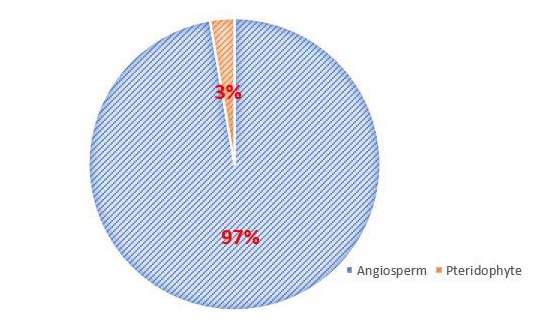
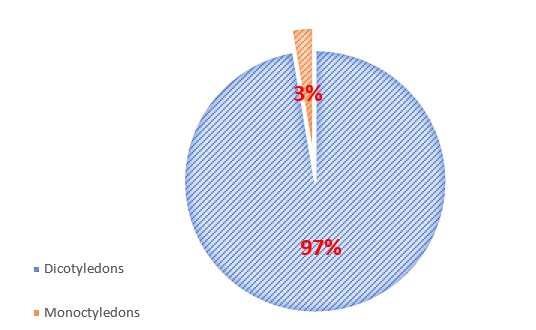
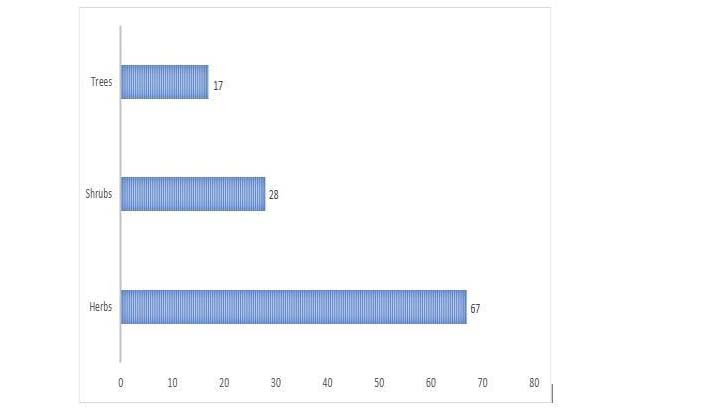
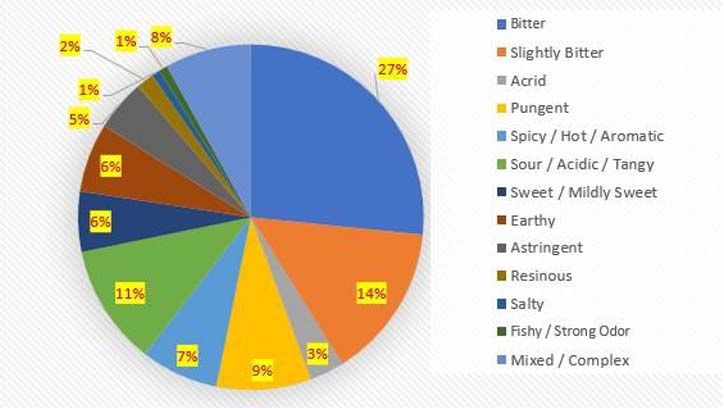
The present investigation documented a total of 112 wild edible plants under 96 genera and 109 families consumed during Bwisagu celebration. Out of documented species, angiosperms represent 109 taxa and 3 species were pteridophyte. During this study, no single edible species of gymnosperm was recorded. Among the documented plants, 22 monocot and 87 were dicot; where numbers of herb, shrub and trees are 67, 28, 17 respectively. The documented plants are mainly used in a traditional bitter–sour curry prepared on the 7th day of the festival and the knowledge on the use of plant transmitting from generation to generation. The wild plant species being documented have varieties of tastes includes bitter, slightly bitter, acrid, pungent, spicy, hot aromatic, sour, acidic, tangy, sweet, mildly sweet, earthy, astringent, resinous, salty, fishy, strong odor, mixed complex type.
The documented plants were collected from diverse habitat such as forest area, forest margin, open area, open fields, grassland roadsides, wastelands, cultivated fields, homesteads gardens, wetland, moist and shady soils and crop fields. The plants serve nutritional, ethnomedicinal with economic and link to own culture and tradition. The main mode of cooking is boiling, with minimal use of oil and spices, sometimes they never used any kinds of oil and spices except salt. The below Table 2: summarizes key ethnobotanical information of wild plant species consumed during celebration Bwisagu.
Table- 2: Enumeration of wild edible plants in Bwisagu festival (Bohag Bihu in Assamese) of Bodo community in Assam
| Sl. No. | Scientific name | Local name (Bodo) |
Habit | Habitat | Parts use | Raw/Roasted Taste |
Season of Availability |
|---|---|---|---|---|---|---|---|
| 1. | Acmella paniculata (Wall. ex-DC.) R.K. Jansen (Asteraceae) |
Jari | Herb | Open area, Crop Filed | Young shoot & Inflorescence |
pungent & acrid taste | Oct.- Apr. |
| 2. | Aeschynomene americana L. (Fabaceae) |
Boslai | Shrub | Forest Area | Young shoot | mild | Mar-Jun |
| 3. | Allium sativum L. (Amaryllidaceae) |
Sambram gufur | Herb | Cultivated | Young shoot & bulb |
pungent, spicy & sharp | Nov.-Apr. |
| 4. | Alpinia nigra (Gaertn.) Burtt. (Zingiberaceae) |
Tharai | Herb | Forest Area, open area |
Young shoot | spicy, aromatic, slightly bitter |
Jan–May |
| 5. | Alternanthera philoxeroides (Mart.) Griseb. (Amaranthaceae) |
Herb | Herb | Forest Area, open area |
Young shoot | mild, slightly bitter | Nov.- April |
| 6. | Alternanthera sessilis (L.) DC. (Amaranthaceae) |
Herb | Herb | Forest Area, open area |
Young shoot | mild, earthy | Throughout the year |
| 7. | Amaranthus spinosus L. (Amaranthaceae) |
Khuduna | Herb | Forest Area, open area |
Young shoot | slightly bitter, earthy |
Apr.–Sept |
| 8. | Amaranthus viridis L. (Amaranthaceae) |
Khuduna | Herb | Forest Area, open area |
Young shoot | slightly bitter, earthy |
Apr.–Sept |
| 9. | Andrographis paniculata (Burm.f.) Wall. ex Nees. (Acanthaceae) |
chiratta | Herb | Forest Area, open area |
Young shoot | Bitter | Apr.-June |
| 10. | Antidesma acidum Retz. (Phyllanthaceae) |
Lafa Saikho | Shrub | Forest Area, open area |
Young shoot | acidic/sour | Throughout the year |
| 11. | Antidesma ghaesembilla Gaertn. | Lafa Saikho | Shrub | Forest areas | Young shoot | acidic/sour | Throughout the year |
| 12. | Asparagus racemosus Willd. (Asparagaceae) |
Satmul | Climber | Forest Area, open area |
Young shoot | slightly bitter & sweet | Apr.–Sept |
| 13. | Azadirachta indica A.Juss. (Meliaceae ) |
Neem | Tree | Cultivated, forest margins | Young leaves | intensely bitter | Throughout the year |
| 14. | Bacopa monnieri (L.) Wettst. (Plantaginaceae) |
Brahmi | Herb | Wetlands, marshy areas |
Young shoot | bitter | Year-round in wetlands |
| 15. | Basella alba L. (Basellaceae) | Mwfrai | Climber | Cultivated, moist areas Climber | Young shoot & leaves |
Mild & Earthy | Apr.–Sept. |
| 16. | Bergera koenigii L. (Rutaceae) |
Nwrsing | Shrub | Home gardens, forest edges |
Young shoot | Aromatic & earthy |
Year-round in homesteads |
| 17. | Bidens pilosa L. (Asteraceae) |
Deumeubai. | Herb | Roadsides, open areas | Young shoot | slightly bitter flavor | Jun.–Apr. |
| 18. | Bischofia javanica Blume (Phyllanthaceae) |
Uriaum | Tree | Forest area | Young shoot | acidic/sour | Throughout the year |
| 19. | Blumea balsamifera (L.) DC. (Asteraceae) |
Jwnglaori | Shrub | Home gardens, forest edges |
Young shoot & leaves |
Pungent & slightly bitter |
Throughout the year |
| 20. | Blumea lanceolaria (Roxb.) Druce (Asteraceae) | Jwnglaori | Shrub | Home gardens, forest edges |
Young shoot & leaves |
Pungent & slightly bitter |
Throughout the year |
| 21. | Calamus erectus Roxb. (Arecaceae) |
Raidwng | Shrub | Forest area, moist slopes |
Young shoot | Bitter | Throughout the year |
| 22. | Calamus tenuis Roxb. (Arecaceae) |
Raidwng | Shrub | Forest area, moist slopes |
Young shoot | Bitter | Throughout the year |
| 23. | Camonea umbellata (L.) A.R. Simões & Staples (Convolvulaceae) |
Goria loti | Climber | Forest edges, thickets |
Young shoot | Slightly bitter | Apr-October |
| 24. | Cardiospermum halicacabum L. (Sapindaceae) |
Kapaal Phuta | Climber | wastelands, forest margins |
Young shoot & leaves |
bitter & astringent |
Apr-October |
| 25. | Carica papaya L. (Caricaceae) |
Mwithru | Tree | Cultivated | Inflorescence | bitter & resinous | Year-round |
| 26. | Celosia argentea L. (Amaranthaceae) |
Daola khungur. | Shrub | Open fields | Young shoot | Mild & slightly earthy |
Apr.–Sept. |
| 27. | Centella asiatica (L.) Urb. (Apiaceae) |
Manimuni gederjhar |
Herb | Moist areas, wetlands, paddy bunds |
Whole plants | slightly bitter & pungent |
Year-round |
| 28. | Centipeda minima (L.) A. Braun & Asch. (Asteraceae) | Hasiu biphang | Herb | Damp soils, marshy areas |
Whole plants | Bitter & aromatic |
Apr.-Oct. |
| 29. | Chenopodium album L. (Amaranthaceae) |
Buthua | Herb | Cultivated fields, wastelands |
Whole plants | Mild & earthy | Nov.-Apr. |
| 30. | Cissus quadrangularis L. (Vitaceae) |
Harjora | Climber | Dry rocky areas, forest margins |
Young shoot | sour & astringent |
Year-round |
| 31. | Clerodendrum colebrookeanum Walp. (Lamiaceae) |
Lukhna biphang | Shrub | Forest edges, thickets |
Young shoot Inflorescence |
strongly bitter Mild & earthy |
Mar.–Oct. |
| 32. | Clerodendrum indicum (L.) Kuntze (Lamiaceae) |
Eklabir | Shrub | Forest edges, thickets |
Young shoot Inflorescence |
strongly bitter Mild & earthy |
Mar.–Oct. |
| 33. | Coccinia grandis (L.) Voigt (Cucurbitaceae) |
Kunduli | Climber | Homestead garden & forest edges |
Young shoot | slightly bitter | Year-round |
| 34. | Commelina benghalensis L. (Commelinaceae) |
Kona Simolu | Herb | Moist soils & crop fields |
Young shoot | Mild, sweet, & slightly bitter taste |
Apr.–Oct |
| 35. | Corchorus capsularis L. ( Malvaceae) |
Fathw | Shrub | Cultivated | Young shoot | Bitter & pungent taste |
Apr.–Sept. |
| 36. | Dendrocnide sinuata (Blume) Chew (Urticaceae) | Khoma | Shrub | Forest & moist areas |
Young shoot Inflorescence |
slightly bitter & pungent Mild & earthy |
Apr.-Oct. |
| 37. | Diplazium esculentum (Retz.) Sw. (Aspleniaceae) | Dingkhia | Herb | Moist shady areas & stream banks |
Young shoot | Mild & slightly earthy, |
Apr.–Sept. |
| 38. | Drymaria cordata (L.) Willd. ex Schult. (Caryophyllaceae) |
Lajjabri | Herb | Shaded moist soils |
Whole plants | pungent & slightly bitter |
Dec.–Oct |
| 39. | Enydra fluctuans Lour. (Asteraceae) |
Helangshi | Herb | Wetlands, aquatic margins |
Young shoot | Bitter | Year-round |
| 40. | Eryngium foetidum L. (Apiaceae) |
Gongar Dhunia | Herb | Cultivated plots & open areas |
Young shoot | slightly sour & aromatic |
Year-round |
| 41. | Euphorbia hirta L. (Euphorbiaceae) |
Nasraikhora | Herb | Roadsides, open fields |
Young shoot | Bitter & acrid | Apr.–Dec. |
| 42. | Fagopyrum cymosum (Trev.) Meisn. (Polygonaceae) |
Mwtha-Sikhla | Herb | Open fields & forest margins |
Young shoot | slightly bitter & earthy |
Apr.–Nov. |
| 43. | Gonostegia hirta (Blume) Miq. (Urticaceae) |
Sum-louthe | Herb | Open fields & forest margins |
Young shoot | Mildly sour & astringent |
Mar.–Sept. |
| 44. | Hellenia speciosa (J.Koenig) S.R.Dutta (Zingiberaceae) | Burhi thokon | Herb | Open area & forest margins |
Young shoot | Slightly sour, pungent & slightly bitter |
Mar.–Sept. |
| 45. | Hemidesmus indicus (L.) R.Br. (Apocynaceae) |
Anantamul | Twining shrub/climber |
Dry open forests | Young shoot | Bitter | Apr.–Sept. |
| 46. | Hibiscus cannabinus L. (Malvaceae) |
Mwtha Bangal | Shrub | Cultivated fields | Young shoot & leaves |
slightly sour & bitter |
Apr.–Nov. |
| 47. | Hibiscus sabdariffa L. (Malvaceae) |
Mwtha | Shrub | Cultivated & homesteads |
Young shoot & leaves |
sour | Apr.–Dec. |
| 48. | Hibiscus surattensis L. (Malvaceae) |
Mwtha Bangal | Shrub | Forest margins & Cultivated |
Young shoot & leaves |
slightly sour & bitter |
Apr.–Nov. |
| 49. | Hibiscus × rosa-sinensis L. (Malvaceae) |
Joba Bibar | Shrub | Home gardens | Young shoot & leaves |
Mild & slightly sweet |
Year-round |
| 50. | Homalomena aromatica (Spreng.) Schott (Araceae) |
Thaso-Mwdwmnai | Herb | Wetlands, shaded moist areas |
Young shoot | aromatic, spicy & slightly bitter |
Year-round |
| 51. | Houttuynia cordata Thunb. (Saururaceae) |
Mosundori | Herb | Wetlands, moist shady areas |
Whole plants | strongly aromatic, fishy, pungent |
Apr.–Sept. |
| 52. | Hydrocotyle sibthorpioides Lam. (Apiaceae) |
Manimuni Gidir Jahar |
Herb | Moist soils, paddy bunds |
Whole plants | slightly bitter & pungent |
Year-round |
| 53. | Hypericum japonicum Thunb. (Hypericaceae) |
Rupha-Fuli | Herb | Open moist areas | Whole plants | bitter & astringent |
Apr.-Oct |
| 54. | Justicia adhatoda L. (Acanthaceae) |
Basigi Gugur | Shrub | Forest edges, homesteads |
Young shoot | Bitter | Year-round |
| 55. | Kaemferia galanga L. (Zingiberaceae) |
Sonfwira | Herb | Forest area & moist soils |
Young shoot & leaves |
spicy, pungent & slightly sweet, |
Mar.–Sept. |
| 56. | Lasia spinosa (L.) Thwaites (Araceae) |
Sibru | Herb | Marshes & wetlands |
Young shoot | Pungent & slightly acrid |
Mar. - Sept. |
| 57. | Leucas aspera (Willd.) Link (Lamiaceae) |
Khangsisa | Herb | Roadsides, open fields |
Young shoot | Pungent & bitter | Oct-Apr. |
| 58. | Malvastrum coromandelianum (L.) Garcke (Malvaceae) |
Dhondra laifang | Herb | Wastelands, roadsides |
Young shoot | mild, slightly bitter, |
Apr.–Sept. |
| 59. | Malvaviscus arboreus Dill. ex Cav. (Malvaceae) | Joba -aloubifang | Shrub | Gardens, forest edges |
Young shoot | mildly sweet | Year-round |
| 60. | Melia azedarach L. (Meliaceae) |
Nwmwsitha/ Ghora neem |
Tree | Open Forest | Young shoot & leaves |
Bitter | Mar.–Jul. |
| 61. | Meliosma simplicifolia (Roxb.) Walp. (Sabiaceae) |
Thouthuwa/lonu- bondha |
Tree | Forest areas | Young shoot | slightly bitter & astringent |
Year-round |
| 62. | Melochia corchorifolia L. (Malvaceae) |
Dhondra Laifang | Herb | Open fields, forest margins |
Young shoot & leaves |
Mild & earthy | Year-round |
| 63. | Mikania micrantha Kunth (Asteraceae) |
Leo-aa bendwng | Climber | Forest edges, wastelands |
Young shoot | bitter & resinous | Year-round |
| 64. | Mimosa pudica L. (Fabaceae) |
Daosa-Mwkhreb | Herb | Roadsides, open fields |
Young shoot | slightly bitter & acrid |
Apr.–Sept. |
| 65. | Momordica charantia subsp. Charantia (Cucurbitaceae) |
Udasi/ kerela- gwkha |
Climber | Forest edges, homesteads |
Young shoot & leaves fruit |
Bitter Bitter |
Apr.–Sept. |
| 66. | Momordica dioica Roxb. ex Willd. (Cucurbitaceae) | Khangkhlor | Climber | Cultivated | Young shoot & leaves |
Bitter | Apr.–Sept. |
| 67. | Moringa oleifera Lam. (Moringaceae) |
Sojna | Tree | Cultivated fields & Open areas |
Young shoot | slightly bitter & pungent |
Year-round |
| 68. | Musa balbisiana Colla (Musaceae) |
Athiya Thalir | Herb | Forest margins, cultivated |
Young Pseudostem |
mild, sweet-tart & slightly bitter |
Year-round |
| 69. | Musa velutina H.Wendl. & Drude (Musaceae) | Hagrani Thalir | Herb | Forest margins, gardens |
Young Pseudostem |
mild, sweet-tart & slightly bitter |
Year-round |
| 70. | Nyctanthes arbor-tristis L. (Oleaceae) |
Sefali | Tree | Homesteads, gardens |
Young shoot | bitter | Year-round |
| 71. | Oenanthe javanica (Blume) DC. (Apiaceae) | Dao-fenda | Herb | Wetlands, paddy fields |
Young shoot | Aromatic & pungent, |
Mar.–Sept. |
| 72. | Oldenlandia corymbosa L. (Rubiaceae) |
Sonafuli | Herb | Open moist areas | Whole plants | bitter & astringent |
Mar.-Nov. |
| 73. | Oroxylum indicum (L.) Kurz (Bignoniaceae) |
Kharong-khandai | Tree | Forest patches | Flower | Bitter | Mar.–Dec. |
| 74. | Oxalis corniculata L. (Oxalidaceae) |
Sengri-Mwkhi | Herb | Moist soils, gardens |
Whole plants | Sour & tangy | Year-round |
| 75. | Paederia foetida L. (Rubiaceae) |
Khefi-bendwng | Climber | Forest edges | Young shoot & leaves |
pungent, strong odor & slightly bitter |
Year-round |
| 76. | Parthenocissus quinquefolia (L.) Planch. (Vitaceae) |
Dousrem | Climber | Forest margins | Young shoot | sour & astringent |
Apr.-Sept. |
| 77. | Passiflora edulis Sims (Passifloraceae) |
Lota-bel | Climber | Cultivated/ gardens |
Young shoot & leaves |
sweet-sour, aromatic & tangy |
Year-round |
| 78. | Peperomia pellucida (L.) Kunth (Piperaceae) | Bilai- gojong | Herb | Moist shady areas |
Young shoot | Mild & Earthy | Mar.–Sept. |
| 79. | Persicaria chinensis (L.) H. Gross (Polygonaceae) | Madhu soleng | Herb | Forest margins | Young shoot | slightly bitter & astringent |
Mar.-Nov. |
| 80. | Persicaria perfoliata (L.) H. Gross (Polygonaceae) | Mwitha-Sikhala | Climber | Forest edges | Young shoot | sour & astringent |
Mar.-Sept. |
| 81. | Phlogacanthus thyrsiformis (Roxb. ex Hardw.) Mabb. (Acanthaceae) | Basigi-bibar | Shrub | Forest edges & homesteads |
Young shoot Inflorescence |
Bitter Bitter |
Nov.–Apr. |
| 82. | Phyllanthus emblica L. (Phyllanthaceae) |
Amlokhi/ amblai | Tree | Forest edges & homesteads |
Fruit | Sour, astringent & bitter |
Nov.-Apr. |
| 83. | Phyllanthus niruri L. (Phyllanthaceae) |
Hagrani amblai | Herb | Open moist areas | Young shoot | bitter | Year-round |
| 84. | Piper longum L. (Piperaceae) |
Simfri | Climber | Forest margins& homesteads |
Young shoot Fruit |
Pungent, spicy & hot Pungent, spicy & hot |
Mar.-Sept. |
| 85. | Portulaca oleracea L. (Portulacaceae) |
Hangsw-affa | Herb | Open fields & gardens |
Young shoot | slightly sour and salty |
Jun.–Sept. |
| 86. | Pouzolzia zeylanica (L.) Benn. (Urticaceae) |
Sam-laothi | Herb | Moist forest areas |
Young shoot | mild, slightly bitter |
Mar.–Oct. |
| 87. | Premna herbacea Roxb. (Lamiaceae) |
Keradapini/ Mathigladab |
Shrub | Forest edges | Young shoot | bitter & pungent | Mar.–Aug. |
| 88. | Rotheca serrata (L.) Steane & Mabb. (Lamiaceae) | Khunkha Raja | Shrub | Forest margins | Young shoot | Bitter | Throughout the year |
| 89. | Sarcochlamys pulcherrima (Roxb.) Gaudich. (Urticaceae) | Adumbra/ Mechaki | Shrub | Forest patches | Young shoot | Mild & slightly astringent |
Throughout the year |
| 90. | Scleromitrion diffusum (Willd.) R.J. Wang (Rubiaceae) |
Daosri-aithing | Herb | Open moist areas | Young shoot | bitter & acrid | Mar. - Oct. |
| 91. | Scoparia dulcis L. (Lamiaceae) |
Bongthang Rakheb | Herb | Open areas | Young shoot | bitter | Mar. - Oct. |
| 92. | Sesbania grandiflora (L.) Poir. (Fabaceae) | Bok Phul | Small tree | Homesteads, gardens |
Young shoot Flower |
Mildly sweet Mildly sweet |
Year-round |
| 93. | Smilax perfoliata Lour. (Smilacaceae) |
Sila -Asugur | Climber | Forest thickets | Young shoot | mildly bitter | Year-round |
| 94. | Solanum nigrum L. (Solanaceae) |
Mwisung | Herb | Roadsides, open fields |
Young shoot | Bitter | Apr.-Sept. |
| 95. | Solanum torvum Sw. (Solanaceae) |
Khunthai | Shrub | Forest margins, homesteads |
Young shoot Fruit |
Bitter Bitter |
Mar.–Oct. |
| 96. | Solanum violaceum Ortega (Solanaceae) |
Khunthai | Shrub | Wastelands, forest edges |
Young shoot Fruit |
Bitter Bitter |
Mar.–Oct. |
| 97. | Solanum virginianum L. (Solanaceae) |
Khunthai | Shrub | Dry open areas, forest margins |
Young shoot Fruit |
Bitter Bitter |
Mar.–Oct. |
| 98. | Solena amplexicaulis (Lam.) Gandhi (Cucurbitaceae) | Lwnthi | Climber | Forest patches | Young shoot Fruit |
Mildly bitter Mildly bitter |
Feb.-Oct. |
| 99. | Spondias pinnata (L.f.) Kurz (Anacardiaceae) |
Thaisuri | Tree | Moist shady soils | Young shoot Fruit |
Sour & tangy sour |
Feb.-Nov. |
| 100. | Stellaria media (L.) Vill. (Caryophyllaceae) |
Nabiki | Herb | Moist shady areas |
Young shoot | Mild & slightly sweet |
Nov.-Apr. |
| 101. | Stellaria wallichiana Haines (Caryophyllaceae) |
Thunthuni | Herb | Forest area & moist soils |
Young shoot | Mild & slightly sweet |
Nov.-Apr. |
| 102. | Talinum fruticosum (L.) Juss. (Talinaceae) |
Phaleng | Herb | Cultivated gardens & open fields |
Young shoot | sour & mucilaginous |
Apr.-Sept. |
| 103. | Tamarindus indica L. (Fabaceae) |
Thingkhlang | Tree | Forest area | Young shoot Fruit |
Sour Tangy |
Oct.- Apr. |
| 104. | Tephrosia candida DC. (Fabaceae) |
Jabwsri | Shrub | Grassland & open areas |
Young shoot Flower |
bitter & acrid Mild |
Mar.–Oct. |
| 105. | Thelypteris parasitica (L.) Tardieu (Thelypteridaceae) | Dingkhia | Herb | Moist shady areas |
Young shoot | Mild & earthy | Feb.–Sept. |
| 106. | Thunbergia grandiflora Roxb. (Acanthaceae) | Dengkhaklu | Climber | Forest edges | Young shoot | Bitter | Feb.-Oct. |
| 107. | Trichosanthes costata Blume (Cucurbitaceae) |
Khaila | Climber | Forest thickets | Young shoot Fruit |
Bitter Bitter |
Mar.- Oct. |
| 108. | Trichosanthes dioica Roxb. (Cucurbitaceae) |
Potol | Climber | Cultivated | Young shoot Fruit |
Bitter sweet, mild & slightly bitter |
Apr.-Sept. |
| 109. | Vitex negundo L. (Lamiaceae) |
Posotia | Shrub | Forest edges | Young shoot | Bitter | Year-round |
| 110. | Zanthoxylum oxyphyllum Edgew. (Rutaceae) |
Jabraing | Medium-sized tree | Forest patches | Young shoot & leaves Fruit |
pungent, spicy & tingling Pungent & spicy |
Mar.-Nov. |
| 111. | Zingiber officinale Roscoe (Zingiberaceae) |
Haijeng | Herb | Cultivated | Young shoot & leaves Rhizome |
spicy, pungent & aromatic spicy, pungent & aromatic |
Year-round, |
| 112. | Ziziphus jujuba Mill (Rhamnaceae) |
Bwigri | Tree | Cultivated | Fruit | sweet & tangy | Year round |
|
|
|
|
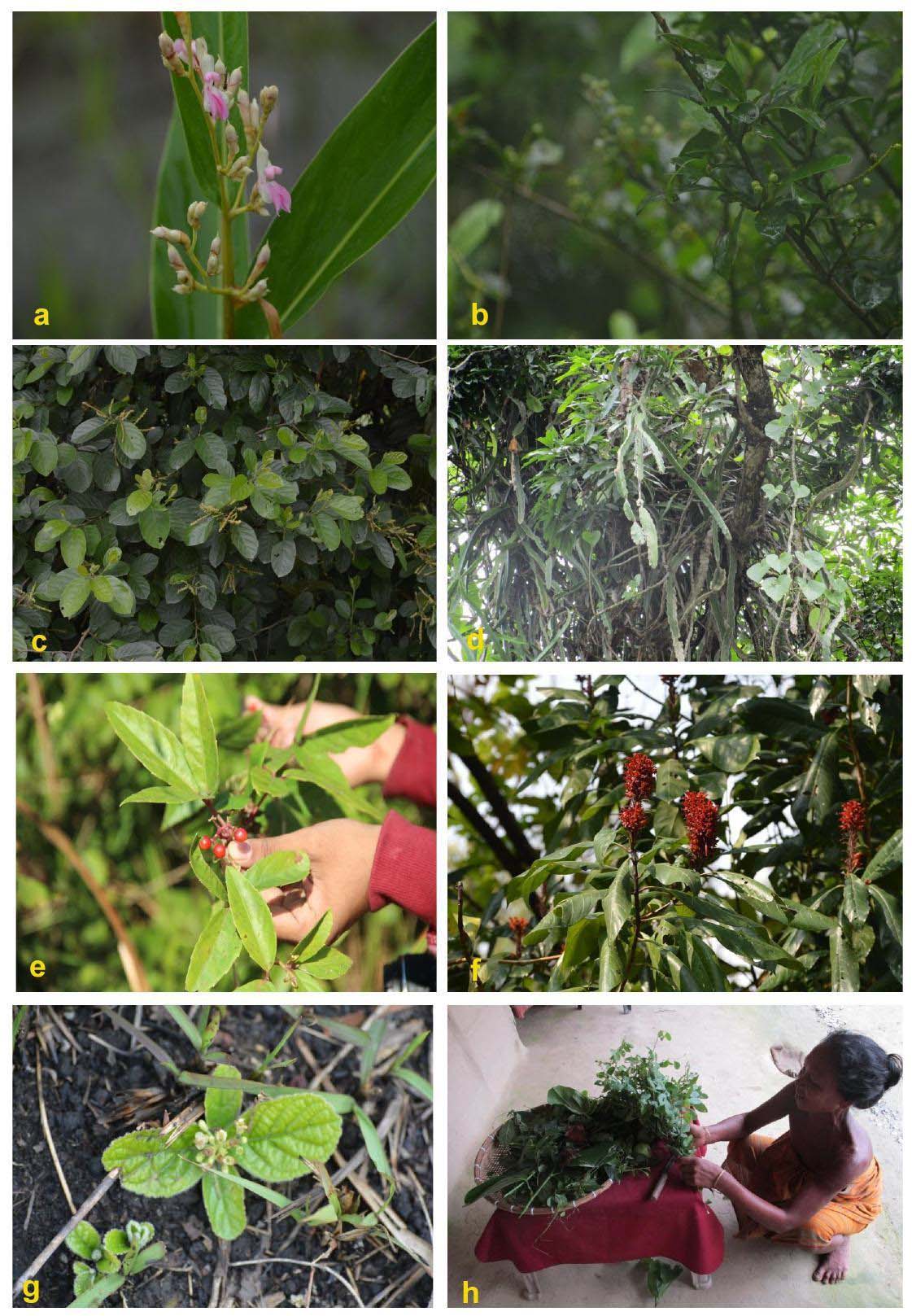
Discussion
Preparation of special dish using wild edible plants during Bwisagu reflects a deep-rooted cultural and ecological tradition among the people of Bodo tribe. The bitter–sour curry represents the transition from the old year to the new, with bitterness representing past hardships and sourness signifying regeneration. These cooking and consuming traditions are not only nutritionally beneficial but also strengthen identity of the community and ecological stewardship. Besides, they believe that they can be healthy and strong for the whole year to do hard agricultural activities. Supporting this study, A documentation work done in Tinsukia district of Assam where 96 wild plant species recorded, of which 56% were used as vegetables, 30% as edible fruits, and 7% as masticatory or spices (Saikia et al., 2025), The reliance on diverse habitats for plant collection demonstrates sustainable use of local biodiversity. Moreover, the oral transmission of knowledge ensures intergenerational continuity and resilience of traditional food systems. Comparative analysis with other ethnic groups in Assam reveals both shared and unique practices, underscoring the region’s rich ethnobotanical heritage. These traditional knowledge of wild plant consumption linked with socio-culture is largely transmitted orally across generations, remain under-documented despite their ethnobotanical importance (Endle, 1990 & Brahma, 2011).
Conclusion
The present investigation highlights the sociocultural significance of wild edible plants used by the Bodo tribe during Bwisagu celebration. Record of 112 wild edible plant species proves the Bodo community linked to deep ethnobotanical knowledge and its role in sustaining conservation of plant resources, alternative nutrition and their cultural uniqueness. Conserving these traditional practices is vital for encouraging sustainable food systems and safeguarding imperceptible socio-cultural heritage of the community. Further research can be found out more valuable information such as exact nutritional and phytochemical content, conservation methods and addition of traditional knowledge into policy frameworks.
Acknowledgement
The authors highly acknowledged their sincere gratitude to the people and households who have shared their valuable information on wild edible plants traditionally consumed during Boisagu (Bohag Bihu) celebration in districts of BTR and upper Assam. Their contributions have been very significant in enlisting the traditional knowledge on wild plants associated with this festival. The authors are also grateful for the support given in collecting and identifying local names with taste of the wild plants used by the Bodo people, which has enriched the genuineness and socio-cultural depth of the study.
Declaration
Conflict of Interest: The authors declare that they have no conflict of interest.
References
- Basumatary B, Baro BC, Baro B, Daimary A. (2025). Documentation and analysis of wild edible plants consumed as herbal food by the Bodos. International Journal of Environmental Sciences, 14(2): 45–53.
- Basumatary J, Thungon RN, Kalita P, Tag H. (2024). Ethnobotany of medicinal plants used by the Bodo community in Kokrajhar district. Journal of Bioresources, 12(1): 31–41.
- Endle S. (1990). The Kacharis. Guwahati: Bina Library (Reprint).
- Jain SK, Rao RR. (1977). A handbook of field and herbarium methods. New Delhi: Today and Tomorrow’s Printers and publishers.
- Neog J. G & Borkataki B. (2025). Ethnomedicinal significance of indigenous plant species of Lakhimpur district, Assam. Journal of Medicinal Plants Studies, 13(1): 32–36.
- Pegu R, Gogoi J, Tamuli AK &Teron R. (2013). Ethnobotanical study of wild edible plants in Poba Reserved Forest, Assam, India: Multiple functions and implications for conservation. Research Journal of Agriculture and Forestry Sciences, 1(3): 1–10.
- Roy U. (2025). Rongali Bihu 2025: The Ekho Ek Bidh Xaak tradition. Slurrp. Available online at: https://www.slurrp.com (Accessed 2025).
- Saikia P, Baro D, Bawri A, Doley B, Basumatary S, Nayak N, & Adhikari A. (2025). Diversity of wild edible plants, nutrition and phytochemical evaluation in Tinsukia district, Assam. Plant Science Today, 12(1): 1–9.
- Saharia S &Yasmin F. (2014). Ethno-botanical studies on some indigenous plants used by the Bodo tribes of Udalguri District. International Journal of Interdisciplinary and Multidisciplinary Studies (IJIMS), 1(2): 39–41.
**************