
Role of plant growth promoting rhizobacteria as a tool for promoting abiotic stress in plants
* Corresponding address: venus.borgohain@gmail.com
Abstract
Recent few decades have observed a tremendous increase in demand for food supply due to rapid increase in global population. However, crop production is adversely affected by abiotic and biotic stress which together causes approximately 80% agricultural loss annually. Abiotic stresses such as drought, salinity, flood, temperature and heavy metal stress hampers plant growth and development by disrupting photosynthesis and nutrient uptake of plants. Plant growth promoting rhizobacteria colonizes the rhizospheric region of soil and promotes plant growth under abiotic and biotic stress conditions. Use of plant growth promoting rhizobacteria in agriculture is a sustainable and environment friendly approach which helps in improving stress tolerance and mitigates stress induced damage in plants. Plant growth promoting rhizobacteria promotes drought tolerance by secreting phytohormones (Indole-3-acetic acid, Gibberellic acid, Abscisic acid, cytokinins), ACC deaminase, exopolysaccharides (EPS) and antioxidant enzymes. These mechanisms collectively modulate root architecture, enhance osmolyte accumulation (proline, sugars, trehalose, glycine-betaine), improve water retention, and reduce ethylene and reactive oxygen species (ROS) levels under drought stress. Salinity stress reduces water uptake capacity and nitrogen fixation rate of plants. Plant growth promoting rhizobacteria induces physical and chemical changes which enhances induced systemic tolerance against salt stress. Plants are used as hyperaccumulators to remove or detoxify heavy metals from soil and water but their growth is adversely affected by higher concentration of heavy metal. Plant growth promoting rhizobacteria may enhance the growth of these hyperaccumulators through direct and indirect mechanisms. The integration of plant growth promoting rhizobacteria in agricultural systems thus offers a promising strategy for sustainable crop production under abiotic stress conditions.
Keywords: Abiotic stress, drought, heavy metal, phytohormones, plant growth-promoting rhizobacteria, salinity, sustainable agriculture.
Introduction
Agriculture is the primary source of food, fodder and livelihood for a rapidly increasing global population. However, the sustainability of agricultural production is increasingly threatened by rapid and unjustified use of toxic chemicals, climate change, environmental degradation, industrialization, urbanization, and decreasing arable land area. Abiotic stresses such as drought, salinity, extreme temperatures, flooding, nutrient deficiency, and heavy metal toxicity are some of the major environmental factors which limits crop productivity worldwide 1. These stresses adversely affect plant growth, development, metabolism, and yield, thereby posing a serious threat to global food security 2. According to recent analysis, climate change is expected to intensify the frequency and severity of abiotic stresses, making the development of sustainable stress-management strategies an urgent necessity for modern agriculture 3. Plants exposed to abiotic stress undergo numerous physiological, biochemical, and molecular alterations. Stress conditions disrupt essential cellular functions such as photosynthesis, respiration, transpiration, nutrient assimilation, membrane stability, and enzyme activity. In addition, abiotic stress often leads to the production of reactive oxygen species (ROS) such as superoxide radicals, hydroxyl radicals, and hydrogen peroxide, which causes oxidative damage to lipids, proteins, nucleic acids, and cellular membranes 4. Although plants possess innate defense systems to fight against these environmental stresses, prolonged or severe stress exposure may exhaust these protective mechanisms, resulting in reduced growth and productivity. Among the different abiotic stresses, drought and salinity are considered to have the most disastrous effect on agricultural production. Drought stress reduces water availability and impairs plant-water relations, while salinity stress causes osmotic imbalances, ion toxicity, and nutrient disorders. These stresses significantly reduce yield and quality of crops in many parts of the world 5. Conventional agricultural approaches primarily depend on the extensive use of chemical fertilizers and pesticides to maintain productivity under stress conditions but the rapid and unlawful application of these toxic chemicals has led to environmental pollution, soil degradation, loss of beneficial microbial diversity, and reduced soil fertility 6. Therefore, there is a growing interest in searching for sustainable and eco-friendly alternatives that can improve the plant growth and stress tolerance without causing apparent ecological harm. In recent years, beneficial soil microorganisms have emerged as a promising tool for sustainable agriculture. Plant Growth-Promoting Rhizobacteria (PGPR) is one of the most suitable microflorae because of their ability to enhance plant growth and improve tolerance against abiotic stresses 7. PGPR are a diverse group of beneficial bacteria that colonize the rhizosphere and establish mutualistic interactions with the plant roots. These bacteria promote plant growth either directly by enhancing nutrient availability and producing phytohormones or indirectly by suppressing phytopathogens and activating the plant defense responses 8. Common PGPR genera include Pseudomonas, Bacillus, Azospirillum, Rhizobium, Enterobacter, and Serratia 9. PGPR alleviate abiotic stress in plants through several physiological and biochemical mechanisms. One of the major mechanisms involves the production of phytohormones such as indole-3-acetic acid (IAA), gibberellins, cytokinins, and abscisic acid, which regulate root architecture and improve water and nutrient uptake under stress conditions 10. Many PGPR also possess ACC deaminase activity, which lowers stress-induced ethylene levels in plants by degrading 1-aminocyclopropane-1-carboxylate (ACC), the precursor of ethylene. Since elevated ethylene concentrations inhibit root growth and plant development under stress conditions, ACC deaminase-producing bacteria help to maintain normal growth even under adverse environments 1. Another important adaptation mechanism employed by PGPR is the production of exopolysaccharides (EPS), which improve soil aggregation, water retention, and root adherence, thereby protecting the plants from excessive drought and salinity stress 5. PGPR also stimulate the accumulation of osmolytes such as proline, trehalose, glycine betaine, and soluble sugars that assists in maintaining the cellular osmotic balance and stabilize key molecules like proteins and cell membranes during stress conditions 11. Furthermore, PGPR enhance antioxidant defense systems by increasing the activities of enzymes such as superoxide dismutase (SOD), catalase (CAT), and peroxidase (POD), which detoxify ROS and minimize oxidative damage in stressed plants 4. In addition to stress mitigation, PGPR contribute significantly to climate smart agriculture by improving soil fertility, nutrient cycling, and crop productivity while reducing the dependence on toxic agrochemicals. This review has been prepared to analyze the role of PGPR in promoting abiotic stress tolerance in plants and also to highlight their mode of action to promote stress tolerance (Fig: 1).
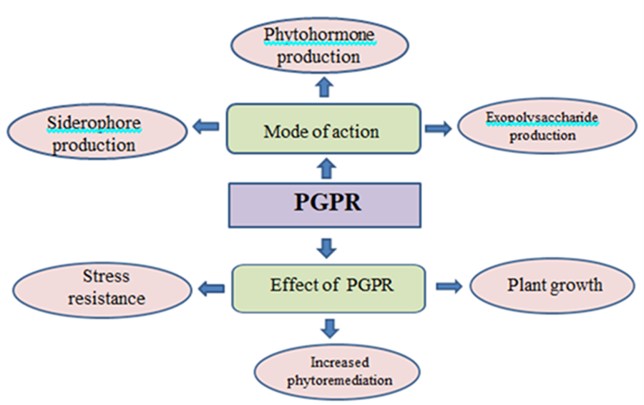
Fig 1: Role and mode of action of plant growth promoting rhizobacteria in promoting stress tolerance in plants
PGPR in mitigation of abiotic stress
a. Drought stress
Drought is the most dominant and harmful abiotic stress condition which affects various growth parameters and stress responsive genes. It reduces cell size, membrane integrity which disrupts cell structure, increases ROS production and promotes leaf senescence that leads to decline in crop yield 12. Drought also results in changes at physiological and morphological level such as increase ethylene production, decrease chlorophyll content and photosynthesis inhibition 13. Drought stress may cause accumulation of free radicals that induce change in membrane function and protein conformation, promote lipid peroxidation which will ultimately result in cell death 12. There are certain drought tolerant microbes which promote plant growth under lower water availability. They may accumulate osmolytes, produce exopolysaccharides and phytohormones and provide nutrition during drought conditions. Exopolysaccharide production increases water contents in plants and solutes such as glycine-betaine and proline maintain membrane permeability and integrity as well as protein activity. Bano et al. 14 observed that application of Azospirillum lipoferum to Zea mays increased accumulation of soluble sugar, free amino acids and proline which in turn increased root length and dry weight of plant body. Inoculation of Rhizobium leguminosarum and Mesorhizobium ciceri to wheat increased the production of catalase, exopolysaccharides and IAA which in turn improved the growth and increased drought tolerance 15. Pseudomonas putida promotes osmolyte accumulation, ROS scavenging expression of stress responsive genes in Cicer arientum 12. Pseudomonas libanensis and P. reactans increased plant growth, leaf relative water and pigment content and decreased proline and malondialdehyde concentration in Brassica oxyrrhina 16, 17. Auxin promotes formation of adventitious and lateral roots, enhances vascular tissue differentiation and cell division in plants under drought stress 18. Abscisic acid is an important plant growth regulator which increases tolerance of plants against drought by increasing transcription of drought related genes and conductivity activity of root 19.
b. Salinity stress
Excessive use of chemical fertilizers in agriculture and other anthropogenic activities has resulted in increased salt concentration in soils. Salinity stress affects water uptake by plants causing water deficit condition in the plant body. Salts in soil occurs as electrically charged ions such as Na+, K+, Ca2+, Cl-, NO3- etc. due to weathering of rocks or inadequate rainfall 20. Salinity stress also reduces the rate of nitrogen fixation in plants which decreases crop yield. Higher concentration of salt inside the plant cells can prove to be toxic and may result in stunted plant growth. PGPR induces physical and chemical changes which enhances induced systemic tolerance against salt stress, promotes plant growth and reduces disease susceptibility. Bacilio et al. 21 observed that inoculation of Chili pepper with Pseudomonas stutzeri reduces the deleterious effects of salinity stress. Some species of PGPR produces biofilms as response to salinity stress which decreases the toxic effects of salts. Salinity resistant microbes promote plant growth directly by producing phytohormones and siderophores, facilitating nitrogen fixation and nutrient accumulation. They affect plant growth indirectly by providing resistance against disease causing microbes. Maize plant when inoculated with Rhizobium and Pseudomonas decreased the effects of salinity stress by reducing the rate electrolyte leakage, increased production of proline and selective uptake of ions 22. Jha et al. 23 reported that Pseudomonas pseudoalcaligenes and Bacillus pumilus increases salinity stress tolerance in Rice. ACC deaminase is an enzyme which converts ACC into ammonia and alpha ketobutyrate and lowers ethylene. Chang et al. 24 reported that Acinetobacter sp. and Pseudomonas sp. produce IAA and ACC deaminase in Barley and Oats during salinity stress and promote growth. Azospirillum promoted higher biomass, increased production of ascorbic acid and antioxidant and lowered the intensity of browning in Lettuce 25. It has been observed that inoculation of AM along with PGPR reduces the deleterious effects of salt stress in plants.
c. Heavy metal stress
Heavy metal contamination has emerged as one of the major environmental challenges worldwide due to chemical exploitation, industrialization, mining, urbanization, and unsustainable agricultural practices. Toxic metals such as cadmium (Cd), lead (Pb), mercury (Hg), chromium (Cr), arsenic (As), and nickel (Ni) accumulate in soil and water ecosystems and pose significant risks to plants, animals, and humans. Conventional remediation techniques are often expensive, labor-intensive, and environmentally disruptive. Phytoremediation is an environment friendly and cost-effective alternative for removing, stabilizing, or detoxifying heavy metals from contaminated sites 26. However, the efficiency of phytoremediation is limited by poor plant growth, low biomass production, and severe oxidative stress induced by heavy metals. PGPR-assisted phytoremediation has become an emerging area of research due to its potential to improve metal uptake, improvement in plant biomass, and tolerance to metal toxicity. PGPR facilitate phytoremediation through phytohormone production, siderophore secretion, phosphate solubilization, ACC deaminase activity, exopolysaccharide production, antioxidant enhancement, and metal immobilization or mobilization activities 27. PGPR synthesize phytohormones such as indole-3-acetic acid (IAA), gibberellins, and cytokinins, which stimulate root elongation and biomass accumulation. Enhanced root systems improve metal uptake and plant survival under contaminated conditions. Heavy metal stress increases ethylene production in plants, leading to growth inhibition. PGPR possessing ACC deaminase degrades 1-aminocyclopropane-1-carboxylate (ACC), the precursor of ethylene, thereby reducing stress, ethylene levels and promoting root growth. Siderophores are iron-chelating compounds produced by PGPR that increase iron availability to plants. They also bind to toxic heavy metals and alter metal mobility and bioavailability in soil 28. Many PGPR species are known to solubilize the insoluble phosphate compounds through the secretion of organic acids. Improved phosphorus availability enhances plant growth and resistance under metal stress conditions. Exopolysaccharides are polymers of carbohydrates which are produced by microorganisms as a product for self-defense and colonization of plant roots. PGPR-produced exopolysaccharides bind to heavy metals in the rhizosphere and reduce their toxicity to plants. Concentration of ROS in plants increases under heavy metal stress. PGPR stimulate production of antioxidant enzymes such as superoxide dismutase (SOD), catalase (CAT), and peroxidase (POD), which protect plants from oxidative damage caused by heavy metals. Certain PGPR strains possess metal-binding proteins and transport systems that accumulate or adsorb heavy metals, thereby reducing metal toxicity in plants.
Conclusion
Abiotic stresses such as drought, salinity, and heavy metal contamination are major constraints, limiting agricultural productivity and threatening global food security. These environmental challenges adversely affect plant growth, physiology, metabolism, and yield by disrupting essential cellular and biochemical process parameters. Climate change and environmental degradation have further intensified the severity and frequency of abiotic stress conditions, necessitating the development of sustainable and eco-friendly agricultural approaches. Plant growth-promoting rhizobacteria has emerged as an effective biological tool for enhancing plant growth and stress tolerance under adverse environmental conditions. Plant growth-promoting rhizobacteria colonize the rhizosphere and establish beneficial interactions with plants through multiple direct and indirect mechanisms. They enhance nutrient availability, improve root architecture, regulate phytohormone production, reduce ethylene levels through ACC deaminase activity, stimulate osmolyte accumulation, produce exopolysaccharides, and activate antioxidant defense systems. These mechanisms collectively improve plant adaptability, maintain cellular homeostasis, and minimize oxidative damage under stress conditions. Under drought stress, plant growth-promoting rhizobacteria improve water uptake, maintain membrane integrity, promote osmotic adjustment, and enhance antioxidant activities, thereby increasing drought tolerance and plant survival. In salinity stress conditions, plant growth-promoting rhizobacteria reduce ionic toxicity, improve nutrient balance, regulate ion transport, and induce systemic tolerance, leading to improved plant growth and productivity. Similarly, under heavy metal stress, plant growth-promoting rhizobacteria -assisted phytoremediation enhances plant biomass, metal uptake, detoxification, and antioxidant defense while reducing heavy metal toxicity through mechanisms such as siderophore production, metal immobilization, phosphate solubilization, and exopolysaccharide secretion. The application of plant growth-promoting rhizobacteria in agriculture offers numerous advantages over conventional chemical-based practices. Plant growth-promoting rhizobacteria are environmentally friendly, cost-effective, and sustainable alternatives that contribute to improved soil fertility, nutrient cycling, and crop productivity while reducing dependence on synthetic fertilizers and pesticides. Advances in molecular biology, genomics, transcriptomics, and microbial biotechnology have further improved understanding of plant-microbe interactions and facilitated the development of efficient microbial inoculants for stress management. Despite significant progress, several challenges remain regarding the large-scale application of plant growth-promoting rhizobacteria under field conditions, including variability in microbial performance, environmental adaptability, survival under harsh conditions, and commercialization constraints. Consequently, subsequent investigations have to concentrate on pinpointing highly effective stress-tolerant plant growth-promoting rhizobacteria strains, formulating stable microbial consortia, elucidating molecular signaling pathways implicated in plant-microbe interactions, and enhancing formulation technologies for agricultural applications. The incorporation of plant growth-promoting rhizobacteria into contemporary agricultural systems signifies a promising approach for sustainable crop production and climate-resilient agriculture.
References
[1]Enebe, M. C. and Babalola, O. O. (2018). The influence of plant growth-promoting rhizobacteria in plant tolerance to abiotic stress: a survival strategy. Applied microbiology and biotechnology, 102(18), 7821-7835.
[2]Vurukonda, S. S. K. P., Vardharajula, S., Shrivastava, M. and SkZ, A. (2016). Enhancement of drought stress tolerance in crops by plant growth promoting rhizobacteria. Microbiological research, 184, 13-24.
[3]Mellidou, I. and Karamanoli, K. (2022). Unlocking PGPR-mediated abiotic stress tolerance: what lies beneath. Frontiers in Sustainable Food Systems, 6, 832896.
[4]Praveen, A., Dubey, S., Singh, S. and Sharma, V. K. (2023). Abiotic stress tolerance in plants: a fascinating action of defense mechanisms. 3 Biotech, 13(3), 102.
[5]Kaushal, M. and Wani, S. P. (2016). Plant-growth promoting rhizobacteria: drought stress alleviators to ameliorate crop production in drylands. Annals of Microbiology, 66(1), 35-42.
[6]Van Oosten, M. J., Pepe, O., De Pascale, S., Silletti, S., and Maggio, A. (2017). The role of biostimulants and bioeffectors as alleviators of abiotic stress in crop plants. Chemical and Biological Technologies in Agriculture, 4(1), 5.
[7]Nadeem, S. M., Ahmad, M., Zahir, Z.A., Javaid, A., &Ashraf , M. (2014). The role of mycorrhizae and plant growth promoting rhizobacteria (PGPR) in improving crop productivity under stressful environments. Biotechnology advances, 32(2), 429-448.
[8]Backer, R., Rokem, J. S., Ilangumaran, G., Lamont, J., Praslickova, D., Ricci, E., Subramanian, S. and Smith, D. L. (2018). Plant growth-promoting rhizobacteria: context, mechanisms of action, and roadmap to commercialization of biostimulants for sustainable agriculture. Frontiers in plant science, 9, 1473.
[9]Olanrewaju, O. S., Glick, B. R. and Babalola, O. O. (2017). Mechanisms of action of plant growth promoting bacteria. World Journal of Microbiology and Biotechnology, 33(11), 197.
[10]El Sabagh, A., Islam, M. S., Hossain, A., Iqbal, M. A. Mubeen, M., Waleed, M., Reginato, M., Battaglia, M., Ahmed, S., Rehman, A., Muhammad, A., Habib-Ur Rehman, A., Ratnasekera, D., Danish, S., Raza, M. A., Rajendran, K., Mushtaq, M., Skalicky, M., Brestic, M., Soufan, W., Fahad, S., Pandey, S., Kamran, M., Datta, R. and Abdelhamid, M. T. (2022). Phytohormones as growth regulators during abiotic stress tolerance in plants. Frontiers in Agronomy, 4, 765068.
[11]Goswami, M., and Suresh, D. E. K. A. (2020). Plant growth-promoting rhizobacteria-alleviators of abiotic stresses in soil: a review: Pedosphere, 30(1), 40-61.
[12]Tiwari, S., C. Lata, P.S. Chauhan and C.S. Nautiyal: Pseudomas putida attunes morphophysiological, biochemical and molecular responsesin Cicer arientinum L. during drought stress and recovery. Plant Physiol. Biochem., 99, 108-117 (2016).
[13]Lata, C. and M. Prasad: Role of DREBs in regulation of abiotic stress responses in plants. J. Exp. Bot., 62(14), 4731- 4748 (2011).
[14]Bano, Q., N. Ilyas, A. Bano, N. Zafar, A. Akram and F. Hassan: Effect of Azospirillum inoculation on maize (Zea mays L.) under drought stress. Pak. J. Bot., 45(S1), 13-20 (2013).
[15]Hussain, M.B., Z.A. Zahir, H.N. Asghar and M. Asgher: Can catalase and exopolysaccharides producing rhizobia ameliorate drought stress in wheat. Int. J. Agric. Biol., 16(1), 3-13 (2014).
[16]Ma, Y., M. Rajkumar, C. Zhang and H. Freitas: Beneficial role of bacterial endophytes in heavy metal phytoremediation. J. Environ. Manage., 174, 14-25 (2016a).
[17]Ma, Y., M. Rajkumar, C. Zhang and H. Freitas: Inoculation of Brassica oxyrrhina with plant growth promoting bacteria for the improvement of heavy metal phytoremediation under drought conditions. J. Hazard. Mater., 320, 36-44 (2016b).
[18]Goswami, D., J.N. Thakker and P. C. Dhandhukia: Portraying mechanics of plant growth promoting rhizobacteria (PGPR): A review. Cogent Food Agric., 2(1), 1127500 (2016).
[19]Jiang, S., D. Zhang, L. Wang, J. Pan, Y. Liu, X. Kong, Z. Yan and D. Li: A maize calcium-dependent protein kinase gene, ZmCPK4, positively regulated abscisic acid signaling and enhanced drought stress tolerance in transgenic Arabidopsis. Plant Physiol. Biochem., 71, 112-120 (2013).
[20]Shrivastava, P. and R. Kumar: Soil salinity: A serious environmental issue and plant growth promoting bacteria as one of the tools for its alleviation. Saudi J. Biol. Sci., 22(2), 123 (2014).
[21]Bacilio, M., M. Moreno and Y. Bashan: Mitigation of negative effects of progressive soil salinity gradients by application of humic acids and inoculation with Pseudomonas stutzeri in a salt-tolerant and a salt susceptible pepper. Appl. Soil Ecol., 107, 394-404 (2016).
[22]Bano, A. and M. Fatima: Salt tolerance in Zea mays (L.) following inoculation with Rhizobium and Pseudomonas. Biol. Fertil. Soils, 45, 405-413 (2009).
[23]Jha, Y., R.B. Subramanian and S. Patel: Combination of endophytic and rhizospheric plant growth promoting rhizobacteria in Oryza sativa shows higher accumulation of osmoprotectant against saline stress. Acta Physiol. Plant., 33, 797-802 (2011).
[24]Chang, P., K.E. Gerhardt, X.D. Huang, X.M. Yu, B.R. Glick, P.D. Gerwing and B.M. Greenberg: Plant growth-promoting bacteria facilitate the growth of barley and oats in salt-impacted soil: implications for phytoremediation of saline soils. Int. J. Phytorem., 16(11), 1133-1147 (2014).
[25]Fasciglione, G., E.M. Casanovas, V. Quilehauquy, A.K. Yommi, M.G. Goni, S.I. Roura and C.A. Barassi: Azospirillum inoculation effects on growth, product quality and storage life of lettuce plant grown under salt stress. Sci. Hortic., 195, 154-162 (2015).
[26]Chirakkara, R.A., C. Cameselle and K.R. Reddy: Assessing the applicability of phytoremediation of soils with mixed organic and heavy metal contaminants. Rev. Environ. Sci. Bio., 15, 299-326 (2016).
[27]Vymazal, J. and T. Brezinova: Accumulation of heavy metals in above ground biomass of Phragmites australis in horizontal flow constructed wetlands for wastewater treatment: A review. Chem. Eng. J., 290, 232-242 (2016).
[28]Saha, J. and Pal, A. (2024). Cadmium biosorption and plant growth promoting efficacy of a metalloresistant Pseudomonas sp. unveils augmented growth with reduced metal accumulation in Brassica napus L. Vegetos, 37(6), 2311-2319.