

Morpho-Anatomical Investigation of selected Verbenaceae taxa from Ri-Bhoi District, Meghalaya
Nabajit Choudhury1 and Nibedita Das2*
1, 2 Department of Botany, University of Science and Technology Meghalaya, India.
*Corresponding address: nibeditadas@ustm.ac.in
Abstract
The Verbenaceae family, known for its diverse plant species, displays remarkable morphological and anatomical variations. This study explores the morphological and anatomical traits of five selected taxa belongs to Verbenaceae family i.e. Lippia alba (Mill.) N.E.Br. ex Britton & P. Wilson, Lantana camara L, Clerodendrum infortunatum L. Stachytarpheta indica (L.) Vahl and Vitex negundo L., found across various locations on the University of Science and Technology Meghalaya (USTM) campus, shedding light on their taxonomy and systematics. Through detailed analysis of leaf, petiole, and stem morphology, this research enhances our understanding of the family's diversity and provides valuable data for plant identification and classification. The findings have significant implications for the taxonomy and phenology of the Verbenaceae family, underscoring the critical role of morphological and anatomical characteristics in plant systematics.
Key word: Anatomy, Morphology, Taxonomy, Verbenaceae, Meghalaya.
Introduction
The Verbenaceae family, also commonly known as the Verbena family, consists of plants mainly from tropical regions like herbs, shrubs, trees, etc. The family Verbenaceae of about 99 genera and 3151 species distributed chiefly in tropics and subtropics. About 22 genera and over 30 species have been reported from India (Roy et al., 2016). The habit of members of Verbenaceae family is widely varied from small trees to lianas to herbs and shrubs. The stems are generally 4-sided with simple leaves. The inflorescence is a raceme, panicle, cyme or head. The flowers are 4-5-merous, mostly zygomorphic with a 2-carpellate gynoecium having a terminal style, the fruit a schizocarp of 1-seeded mericarps or a drupe of pyrenes (Simpson, 2010). Most of the plants belong to this family are widely used for traditional medicinal systems in several countries. Relatively a number of the plants have been reported to comprise of bio-active phytochemicals with significant pharmacological effects. Several species belong to this family are of much economic importances viz. Vitex, Tectona, Premna, Gmelina, Callicarpa, Clerodendrum, Holmskioldia, Stachytarpheta jamaicensis (ornamental) etc. as some of these species are the source of important medicines (Srivastava & Choudhary, 2008; Sultana & Rahaman, 2020).
Ecological factors frequently cause members of the same taxon occurring in different regions to exhibit significant morphological variation. Subsequently, morpho-anatomical investigation plays a vital role in the identification and systematic revision of taxa (Metcalfe & Chalk, 1979). To accurately determine stem characteristics—such as shape, size, and the structure of primary and secondary veins—it is essential to examine anatomical features, as these traits are often difficult to assess through external morphological observation alone. Therefore, the present study aims to describe the anatomical features of petioles and stems Lippia alba (Mill.) N.E.Br. ex-Britton & P. Wilson, Lantana camara L., Lippia alba (Mill.) N.E.Br. ex Britton & P. Wilson, Clerodendrum infortunatum L. Stachytarpheta indica (L.) Vahl and Vitex negundo L., as a contribution to future taxonomical studies of Verbenaceae family.
Materials and methods
The flowering twig of 5 selected species of Verbenaceae family were collected from different locations of Ri-Bhoi District, Meghalaya. The collected specimens were preserved as herbarium specimen following standard methods (Jain & Rao, 1977) and are deposited at the herbarium of USTM. The plant specimens were identified by consulting different local relevant floras and literature (Kanjilal et al., 1938; Hooker, 1982). For micromorphological analysis, thin sections of stem and petiole were prepared and stained with safranin and fast green following Johansen's (1940) method. Anatomical descriptions were studied by Metcalfe and Chalk's (1979) review.
Results
Taxonomic enumeration
1. Clerodendrum infortunatum L. in Sp. Pl.: 637 (1753)
Terrestrial shrub, 2-4 feet in height; slightly woody; quadrangular, blackish stem and simple, opposite-
decussate, petiolate, exstipulate, coriaceous, hairy leaves with a displeasing odour. Flowers are bluish-
purple often white in pyramid shaped terminal panicles. Leaves opposite oblong or elliptic, serrate,
flowers are blue, many in long cylindrical thyrsus and the fruits are 4-lobed, purple drupe.
Flowering & Fruiting: August-September
Local name: Dhopat-tita (Ass.), Bhant (Beng.)
2. Lantana camara L. in Sp. Pl.: 627 (1753)
Shrubs, branch weak, recurved prickles, pubescent. Petiole 1.1-2 cm; leaf blade ovate to oblong, 3.2-
7.5 × 1.5-5 cm, rough, aromatic, base rounded to subcordate, margin crenate; lateral veins 5 pairs,
prominent. Capitula terminal, 1.5-3cm. Flowers yellow or orange, deep red. Ovary glabrous. Drupes
globose.
Flowering & Fruiting: throughout the year
Local name: Goubon Gu-phul (Ass.), Raimuniya (Hin.)
3. Lippia alba (Mill.) N.E.Br. ex Britton & P. Wilson in Bot. Porto Rico 6: 141 (1925)
shrub, about 1-2 m height with thin-arched quadrangular, light brown to whitish branches. Petiole is
0.5-1.4 cm long. Leaves simple, 1.2-3.1 cm long with opposite phyllotaxy with an oblong, elliptic to
ovoid leaf blade. Inflorescence is axillary with short axis. Flowers are bisexual, small, rosy-violet
corolla with yellow nectar. Ovary superior, fruit globose, pear shaped with rosy-pink seeds.
Flowering & Fruiting: Throughout the year
Local name: Phukota bon (Ass.) Shada Motmotiya (Beng.)
4. Stachytarpheta indica (L.) Vahl in Enum. Pl. Obs. 1: 206 (1804)
An erect branched woody, with slightly angled stem. stem is hairy, leaves elliptic to oblong-ovate,
serrate and 2-9 cm long, decurrent base. Inflorescence, terminal spikes. Flowers deep-blue, sessile,
glabrous, slender, rachis dark-green, bracteates, bracts lanceolate. The terminal spikes are rather
slender, 10–30 cm long and 0.3-0.4 cm thick. The calyx is small, oblique with four teeth on margin.
Corolla blue or blue-purple. Fruit enclosed with calyx and oppressed to and somewhat sunk in the
smooth and oblong rachis.
Flowering & Fruiting: June to September
Local name: Nilchori/ Jarbo/ Jarbas (Assamese)
5. Vitex negundo L. in Sp. Pl.: 638 (1753)
Deciduous shrub, woody aromatic, 2-4 m in height, branches quadrangular, bark grey. Leaves
palmately compound, petiole 2.5-3.6 cm long, leaflet lanceolate or narrowly lanceolate, middle leaflet
5-10 cm long with 1-1.3 cm long petioles, remaining two sub-sessile, surface glabrous above and
tomentose beneath, texture leathery. Flowers bluish-purple, small, inflorescences terminal, often
compound pyramidal panicles. Fruit is rounded drupe and light brown to black in colour.
Flowering & Fruiting: July- January
Local name: Postoia (Ass.) Samalu (Beng.)
Morpho-Anatomy
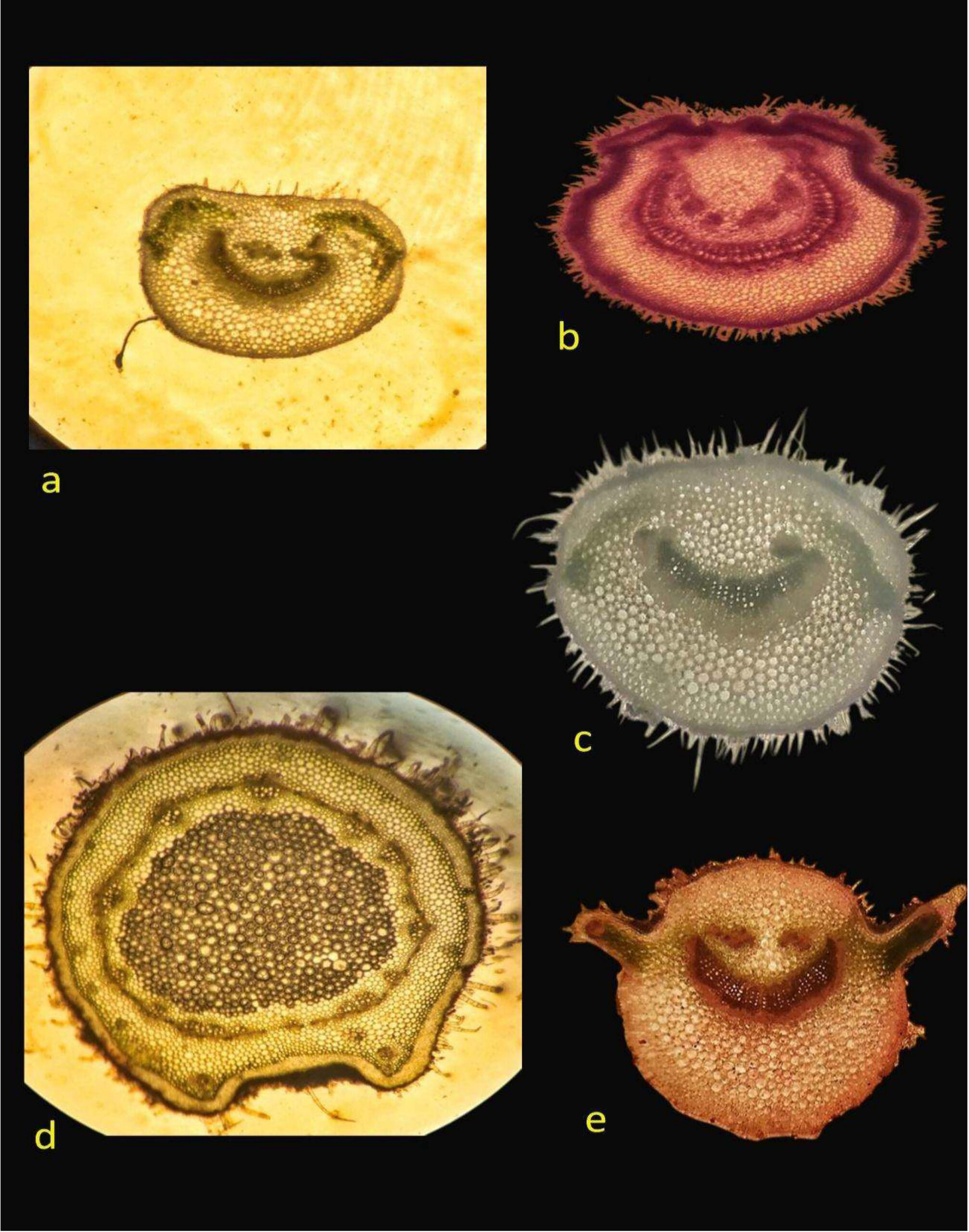
Table 1: The qualitative anatomical characteristics of petiole of studied species
| Sl.no. | Species | Leaf Shape | O.S.P.C.S. | Trichomes | E.C.L. | Cortex cell shape | Pith Cells |
|---|---|---|---|---|---|---|---|
| 1. | Clerodendrum infortunatum L. | Ovate | D-shaped | + | Irregular, Circular | Angular, Round | Thick walled, Parenchymatous cells |
| 2. | Lantana camara L. | Ovate | D-shaped or Oval shaped | + | Irregular, Circular | Round | Thin walled Parenchymatous cells |
| 3. | Lippia alba (Mill.) N.E.Br. ex Britton & P. Wilson | Oblong | Oval shaped | + | Irregular, Circular | Angular | Thick walled, Parenchymatous cells |
| 4. | Stachytarpheta indica (L.) Vahl | Elliptic-oblanceolate | Shallowly grooved | + | Irregular, Circular | Round | Thin walled Parenchymatous cells |
| 5. | Vitex negundo L. | Digitate | U-shaped | + | Irregular | Angular, Round | Thick walled Parenchymatous cells |
+= Presence of trichomes, O.S.P.C.S. - Outline shape of petiole cross section, E.C.L. - Epidermal cell layer
Table 2: The quantitative anatomical characteristics of petiole of studied species.
| Sl. No. | Species | P.L. (cm) | B.O.P (cm) | No. of E.C.L. | No. of H.C.C.L. | No. of C.P.C.L. | No. of V.B. | N.C.P.T |
|---|---|---|---|---|---|---|---|---|
| 1. | Clerodendrum infortunatum L. | 1-10 | 0.5 | 1 | 1-5 | 1-9 | 14-15 | 1-9 |
| 2. | Lantana camara L. | 1.3 | 0.1-0.2 | 1 | 2-3 | 7-8 | 30-31 | 1 |
| 3. | Lippia alba (Mill.) N.E.Br. ex Britton & P. Wilson | 0.9-1 | 0.1 | 1 | 2-3 | 6-7 | 6-7 | 1-3 |
| 4. | Stachytarpheta indica (L.) Vahl | 0.3-0.4 | 0.1 | 1 | 3-4 | 8-9 | 28-29 | 1-3 |
| 5. | Vitex negundo L. | 3-6 | 0.1 | 1 | 4-5 | 7-8 | 40-45 | 1-3 |
P.L.- Petiole length, B.O.P.-Breadth of petiole, E.C.L.- Epidermis cell layer, H.C.C.L.- Hypodermal Collenchymatous Cell Layer, C.P.C.L.- Cortex Parenchyma Cell Layer, V.B.- Vascular Bundle, N.C.P.T.- Number of Cell Present in Trichomes
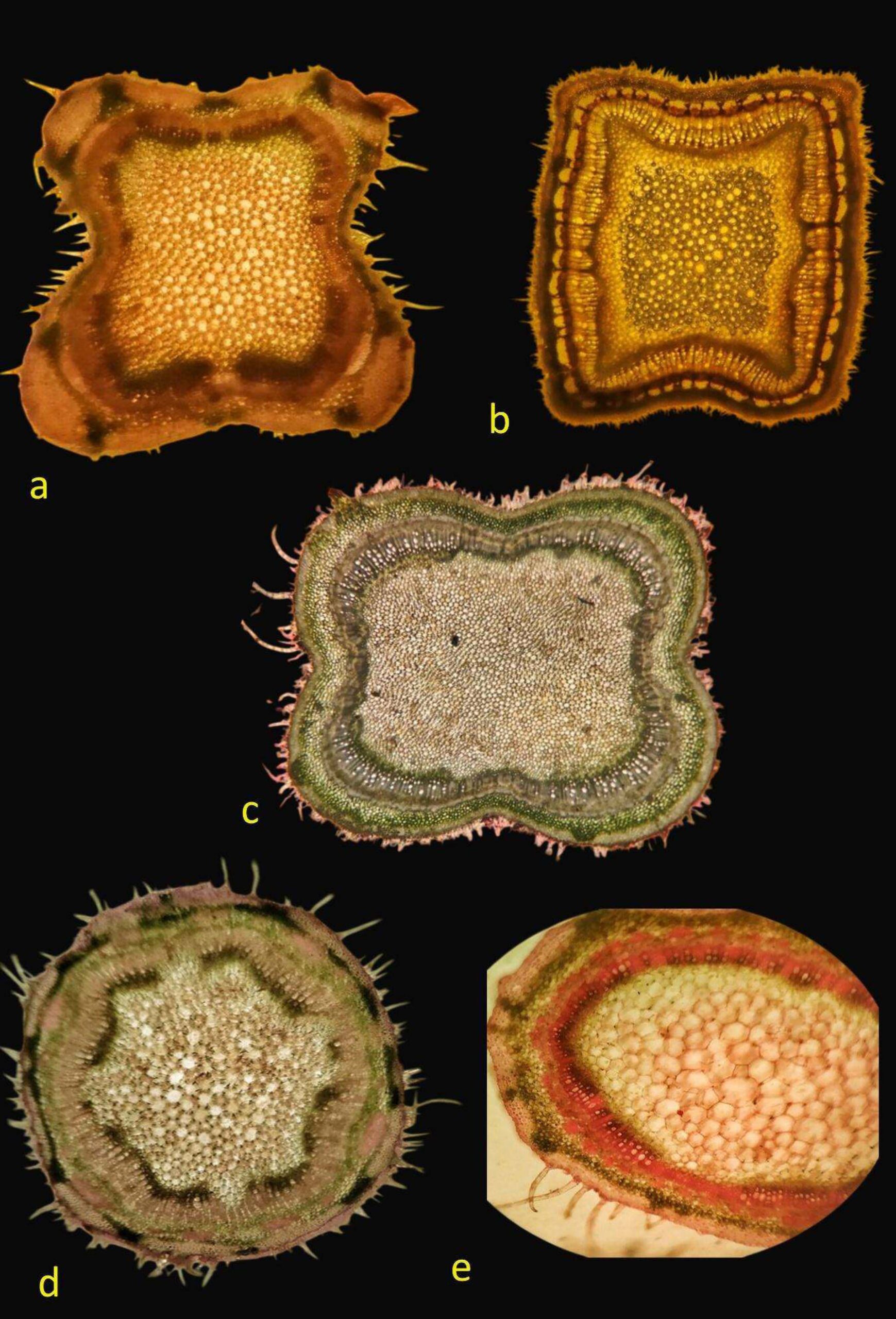
Table 3- The qualitative anatomical Characteristics of Stem of Studied species
| Sl. no | Species | S.O.S. | Trichome | E.C.L. | C.C.L. | Pith Cells |
|---|---|---|---|---|---|---|
| 1. | Clerodendrum infortunatum L. | Quadrangular | + | Irregular, Round | Angular, Round | Thick walled Parenchymatous cell |
| 2. | Lantana camara L. | Quadrangular | + | Irregular, Round | Round | Thin walled Parenchymatous cell |
| 3. | Lippia alba (Mill.) N.E.Br. ex Britton & P. Wilson | Round | + | Irregular, Round | Angular | Thick walled Parenchymatous cell |
| 4. | Stachytarpheta indica (L.) Vahl | Round | + | Irregular, Round | Round | Thin walled Parenchymatous cell |
| 5. | Vitex negundo L. | Quadrangular | + | Irregular | Angular, Round | Thick walled Parenchymatous cell |
+=Trichome present, E.C.L.-Epidermal Cell Layer, C.C.S-Cortex Cell shape
Table 4- The quantitative anatomical characteristics of Stem of studied species
| Sl. No. | Species | B.O.S. (cm) | N.O. E.C.L. | N.O. H.C.C.L. | N.O. C.P.C.L. | N.O. V.B. | N.O. C.P.T |
|---|---|---|---|---|---|---|---|
| 1. | Clerodendrum infortunatum L. | 1-2 | 1 | 1-5 | 7-9 | 14-15 | 1-9 |
| 2. | Lantana camara L. | 0.6-0.7 | 1 | 3-4 | 7-9 | 30-31 | 1 |
| 3. | Lippia alba (Mill.) N.E.Br. ex Britton & P. Wilson | 0.5-0.6 | 1 | 2-3 | 6-7 | 6-7 | 1-3 |
| 4. | Stachytarpheta indica (L.) Vahl | 0.3-0.5 | 1 | 3-4 | 8-9 | 28-29 | 1-3 |
| 5. | Vitex negundo L. | 0.3-0.4 | 1 | 3-4 | 7-8 | 40-46 | 1-3 |
P.L.- Petiole length, B.O.S.- Breadth of Stem, N.O.E.C.L.- Number of Epidermis cell layer, N.O. H.C.C.L.- Number of Hypodermal Collenchymatous Cell Layer, N.O.C.P.C.L.- Number of Cortex Parenchyma Cell Layer, N.O.V.B.- Number of Vascular Bundle, N.C.P.T.- Number of Cell Present in Trichomes.
Table 5- Economic Importance of studied species
| Sl. No. | Species | Parts used | Active compound | Uses |
|---|---|---|---|---|
| 1. | Clerodendrum infortunatum L. | Leaf, slender stem, root | Glycerides, clerodone, lupe rol (Debnath et al., 2024) | The leaves are antiperiodic and tonic to treat Blenorrhoea, Leaf sap is used as an antiseptic skin wash also used to treat Poultice to burn, ulcer, boils and skin diseases, Roots are used as antidote for Antiaris poisoning and dysentery. Stem is used as toothbrush to treat toothache. |
| 2. | Lantana camara L. | Stem, root, leaves, stalk | E-caryophyllene, germacrene, bicyclogermacrene (Bhoye & Hase, 2022) | Used to treat Cancers, Chicken pox, Measles, Asthma, Ulcers, Swellings, Eczema, Tumors, High blood pressure, Billous fever, Catarrhal infections, Tetanus, Rheumatism, Malaria, Antiseptic, Antispasmodic, Carminative, Diaphoretic and also used to make furniture from the stalk. |
| 3. | Lippia alba (Mill.) N.E.Br. ex-Britton & P. Wilson | Root, leaves, & flower | Citral, geraniol, limonene (Filho & Souza, 2009) | It cures ingestive troubles, Nausea or vomiting, Stomach pain, Diarrhea, Bronchitis, Sore throat, Cough syrup, Cold, Cardiovascular Hypertension, Headache, Skin diseases, also used as ornaments etc. |
| 4. | Vitex negundo L. | Leaf, Seed, root | Viridiflorol, caryophyllene oxide, globulol (Haq et al., 2004). | Flavonoid glycoside and a long chain ester from the roots of Vitex negundo. |
| 5. | Stachytarpheta indica (L.) Vahl | Stem, bark, leaves | Ipolamide, verbascoside & Verbascoside (Modi et al., 2025) | It is traditionally used to heal wounds, inhibit bacterial growth, promote tissue regeneration and reduce inflammation. |
Discussion
The anatomical characters on the five species of the Verbenaceae family showed nearly similar anatomical characteristics, but some significant distinct features are observed. The resulted anatomical data offers reliable characters beneficial for the restriction of species. It is apparent that by a comparative analysis of the several petiolar characters, it will be possible to precisely characterize the taxa. Important taxonomic features for taxonomic evaluation include trichomes, petiole and stem outline shapes (in transverse section), air canals, number of main vascular bundles, thickness of chlorenchymatous and hypodermal layers and width of the middle portion and sheaths. Our observations suggest that combining morphological, qualitative and quantitative petiole and stem anatomical characters can aid in taxonomic treatment, even in the vegetative stage. More research should emphasis on integrating petiole anatomical examination with molecular data to improve taxonomic classification. Growing the study to include additional species across diverse environments could deliver deeper insights into the adaptive consequence of petiole structures (Mishra et al., 2021).
Conclusion
The comparative study of Lantana camara, Vitex negundo, Clerodendrum infortunatum, Lippia alba and Stachytarpheta indica reveals both shared patterns and distinctive adaptations within the Verbenaceae family. All five species exhibit a single, collateral vascular bundle surrounded by a well-defined bundle sheath, reflecting a conserved structural blueprint for the leaf-stem junction. However, notable differences emerge in collenchyma thickness, the development of sclerenchyma caps, and the presence of secretory cavities. Lantana camara shows a robust collenchymatous ring that likely provides mechanical support in its open, sunny habitats, while Vitex negundo possesses pronounced adaxial sclerenchyma, suggesting enhanced leaf rigidity. Clerodendrum infortunatum and Stachytarpheta indica display extensive secretory cavities, which may be linked to the production of secondary metabolites with ecological roles. Lippia alba exhibits a relatively thin collenchyma layer but a conspicuous perivascular parenchyma, possibly facilitating rapid water transport in its moist-shrub environments.
These anatomical variations correlate with the species’ ecological preferences and highlight the petiole’s role in mechanical support, vascular integration and chemical defence. The findings underscore the utility of petiolar characters for systematic and ecological inferences within Verbenaceae and suggest that further ontogenetic and phylogenetic investigations could clarify how these traits have evolved in response to environmental pressures.
Declarations
Conflict of interest: The authors declare that they have no conflict of interest.
References
1. Hooker, J.D. (1872-1897). The Flora of British India. Vols. 1-7 (Ind. Repr. 1973). Bishen Singh Mahendra Pal Singh, Dehra Dun, India.
2. Jain, S.K. & Rao, R.R. (1977). A Handbook of Field and Herbarium Methods. Today and Tomorrow Printers and Publishers, New Delhi.
3. Johanson, D.A. (1940). Plant micro technique. Mc Graw Hill Boot Company Inc. New York and London.
4. Kanjilal, U.N., Kanjilal, P.C. & Das, A. (1938). Flora of Assam, Vol. 2. Assam Govt. Press, Shillong.
5. Metcalfe, C.R. & Chalk L. (1979). Anatomy of the Dicotyledons Volume II. Oxford University Press. Amen House, London EC4.
6. R.C. Srivastav & R.K. Choudhary (2008). Species Diversity and Economic Importance of the family Verbenaceae in Arunachal Pradesh. Bulletin of Arunachal Forest Research, 24 (1&2):1-21.
7. Roy, O.R., Sultana, R.S. & Rahman, A.H.M.M (2016). Taxonomic Study and Medicinal Uses of Verbenaceae Family of Rajshahi District, Bangladesh. Journal of Progressive Research in Biology, 3(1): 160-172.
8. Simpson M.G. (2010). Diversity and Classification of Flowering Plants: Eudicots. Plant Systematics (Second Edition). Elsevier. Pp. 275-448.
9. Sultana, R.S. & Rahman, M.M. (2020). A Review on Anatomy of Plants in Verbenaceae. EXIM Bank Agricultural University Bangladesh Journal. 2:36-50.
10. Debnath, S., Sarkar, S., Shil, D. & Bhowmik D. (2024). A Comprehensive Review of the Phytochemical Constituents and Pharmacological Properties of Clerodendrum infortunatum Linn. International Journal of Pharmaceutical Sciences. 2(10): 356-367. International Journal of Research and Analytical Reviews. 9(2):934-939.
11. Filho, J.G.S. & Souza, I.A. (2009). Phytochemistry and acute toxicity from the roots of Lippia alba (Verbenaceae). Pharmaceutical Biology. 47(2):142-145.
12. Azhar-Ul-Haq, Malik, A., Anis, I., Khan, S.B., Ahmed, E., Ahmed, Z., Nawaz, S.A. and Choudhary, M.I. (2004). Enzyme Inhibiting Lignans from Vitex negundo. Chemical and Pharmaceutical Bulletin. 52:1269-1272.
13. Modi, K., Varsani, R., Bhatt, M., Gadhvi, K. and Shah, M. (2025). Pharmacognostical and Phytochemical Investigations on Stachytarpheta indica. Pharmacognosy Research. 17(4):1367-1373.
14. Mishra, S., Patel, D., & Liu, Y. (2021). Broadening taxonomic and ecological sampling to uncover the adaptive significance of petiole anatomy in Verbenaceae. Functional Plant Biology, 48(4), 567-579.
********