
Ethno botanical study of orchid flora of Tharu community, Amaltari, Nepal
1Afasana Pandey*, 2Manoj Kumar Lal Das
1&2Department of Botany, Birendra Multiple Campus, Bharatpur, Chitwan, Nepal
*Corresponding author: Email: Pandeyafasana@gmail.com
Abstract
This study documents the ethno botanical knowledge and traditional uses of orchid flora among the Tharu community of Amaltari, Nawalpur, Nepal. Surveys on medicinal orchids was done during June–July, 2025 using home to home surveys, interviews with aged person and village healer, and direct observations. During this study, A total of 60 households was surveyed, revealing that 42% of respondents recognized orchids as medicinally valuable, 33% denied their use and 25% were unaware. It was observed that orchids were primarily applied for treating wounds and cuts (37%), digestive disorders (27%), and fever (18%), with additional uses for skin diseases, rheumatism, muscular pain, bone fractures and eye problems. Roots were the most commonly used plant parts, followed by leaves, pseudo bulbs, whole plants and stems. Preparation methods included crushing into paste, decoction, drying into powder, and juice extraction, though knowledge gaps were observed in some cases. The results highlight the deep-rooted reliance of the Tharu community on orchids species for primary healthcare, while also pointing to the need for conservation and sustainable management of orchid species, which face increasing threats from destruction of habitat and exploiting.
Key words: Amaltari, Ethno botany, Flora, Orchids, Traditional uses.
Introduction
The family Orchidaceae is a cosmopolitan and highly diverse family of flowering plants, found across tropical, subtropical, and temperate regions of the world. Nepal is home to approximately 377 native orchid species from 100 genera (Rajbhandari and Dahal, 2004). While most orchid species in Nepal are categorized under Appendix II and Appendix III of CITES, Paphiopedilum insigne and Paphiopedilum venustum are exceptions, being listed in Appendix I due to their higher risk of extinction (CITES, 2021). Orchids are widely utilized in traditional medicine to treat serious ailments (Pant and Raskoti, 2013). In Nepal, orchids are traditionally used as remedies to enhance digestion, promote the production of body fluids, and lower fever (Ng et al., 2012).
Orchids are widely valued for their medicinal properties in both traditional and Ayurvedic systems of medicine. Orchis hatagirea is valued as an effective tonic and medicinal plant. Additionally, Cypripedium cordigenum and Orchis hatagirea is valued as an effective tonic and medicinal plant and are also consumed as vegetables, while Platanthera clavigera and Satyrium nepalensis serve as edible food sources. Orchids have been discovered to be a valuable source of natural compounds that exhibit powerful therapeutic effects against a range of diseases. These compounds display a wide range of properties, including antioxidant, anti-rheumatic, anti-inflammatory, antiviral, anti-carcinogenic, anticonvulsive, diuretic, neuro protective, relaxing, anti-aging, wound healing, hypoglycemic, antitumor, anticancer, antimicrobial, and antiviral activities (Joshi et al., 2023; Shimura et al., 2007; Kumar et al., 2000; Devkota et al., 2022; Pant et al., 2022; Chand et al., 2016). According to (Rajbhandari et al., 2000), several orchid species in Nepal are recognized for their medicinal value. These include Brachycorythis obcordata, Coelogyne flacida, Coelogyne stricta, Cymbidium aloifolium, Dactylorhiza hatagirea, Eulophia nuda, Flickingeria macraei, Pholidota imbricata, Luisia zeylanica, and Vanda tessellata.
Material and Method
Study area
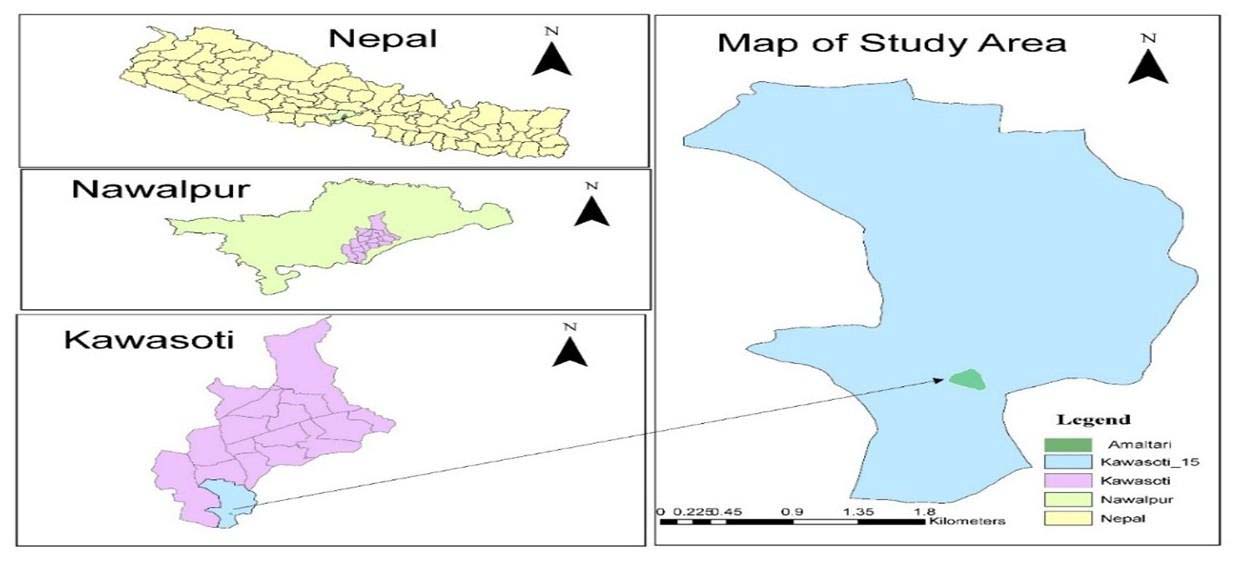
The study area was the Kawasoti Municipality Ward no.15, Amaltari, in Nawalpur district, central Nepal. The area lies in the Gandaki province of Nepal. It is adjacent to Chitwan National Park, and serves as a gateway to the park.
Vegetation
The vegetation pattern of study area is riverine forest. The important tree flora is Senegalia catechu, Bombax ceiba, Dalbergia sissoo, Murraya koenigii, and Syzygium cumini.
Demography
According to the 2021 CBS, Nepal, a total of 4,767 people lived in Kawasoti-15, where 23.1% of the population belonged to the Tharu community.
Data Collection
The primary data were collected mainly by the methods household survey, Key informant survey and Direct Observation. A direct and participant observation was employed and random sampling technique (Pun and Thapa, 1996) in order to obtain representative and trustworthy data. GPS points were recorded using a handheld GPS device. The household survey was conducted randomly to gather information on people’s perceptions of orchid use, their availability and identification, as well as the benefits and traditional medicinal uses for treating various diseases. During data collection from stakeholders, community leaders, and local experts, utilizing structured interview to gain insight into the perspectives of orchids on identification, medicinal values, and different types of orchid species found in this area, threats as well as current conservation efforts conducted to orchids in Nawalpur, Nepal. The documented orchids plants were identified through morphological observation and review literature (Devkota et al., 2022; Pant & Raskoti, 2013 Rajbhandary et al., 2000; Pun & Thapa; 1996) and herbarium available in websites https://www.kew.org/science, https://www.tropicos.org/home etc.
Data analysis
To assess the data for this study, both qualitative and quantitative analysis techniques were used. Every question in the set of interviews is categorized and assembled. Before analyzing the data gathered from the preliminary survey, questionnaire survey, and observation survey, the fundamental processes were compilation, categorization, and tabulation. Ms Excel, Ms Words and other appropriate tools were used for analysis. Distribution maps were prepared using ArcGIS.
Result and Discussion
Ethno botanical uses of orchid species
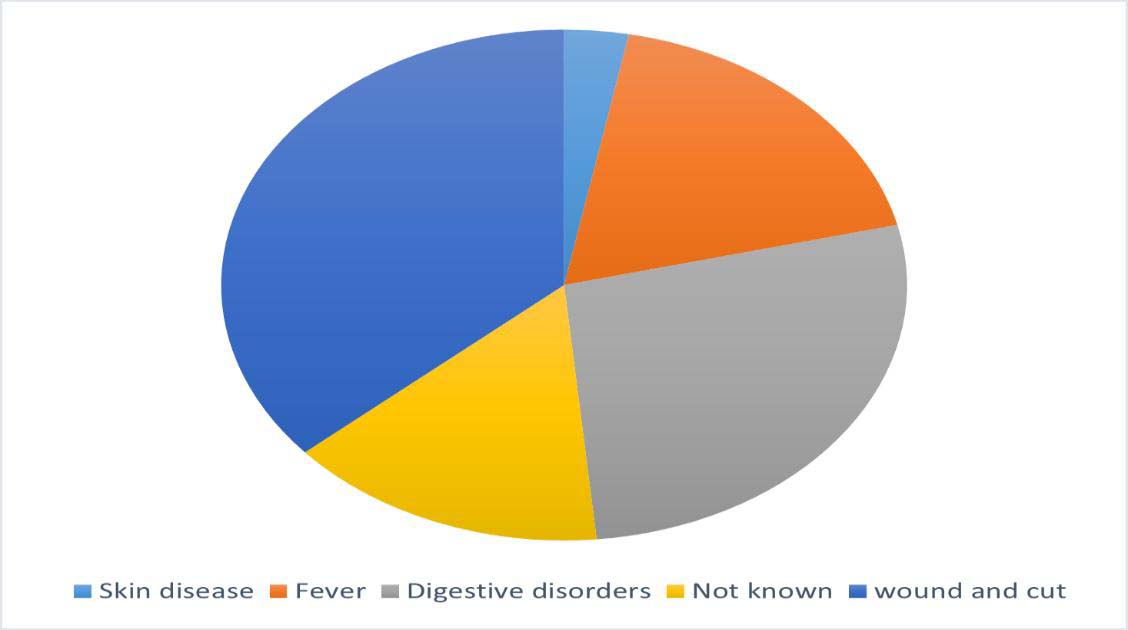
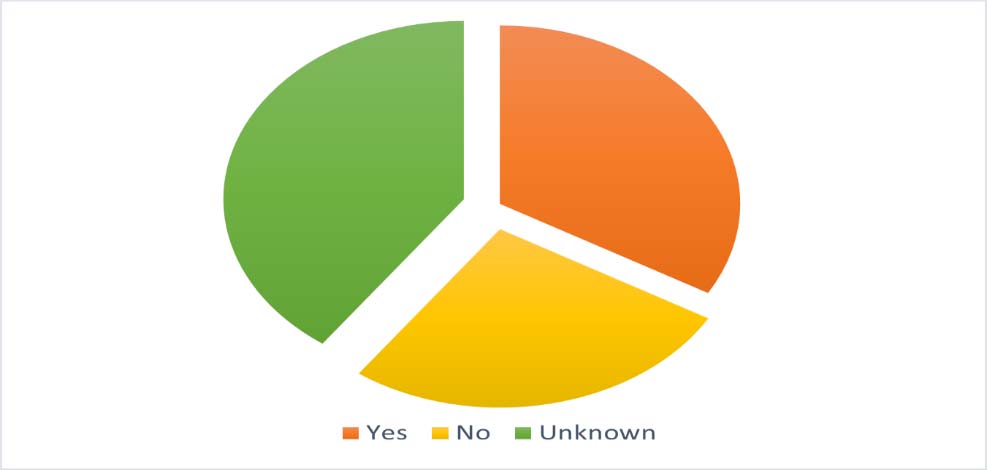
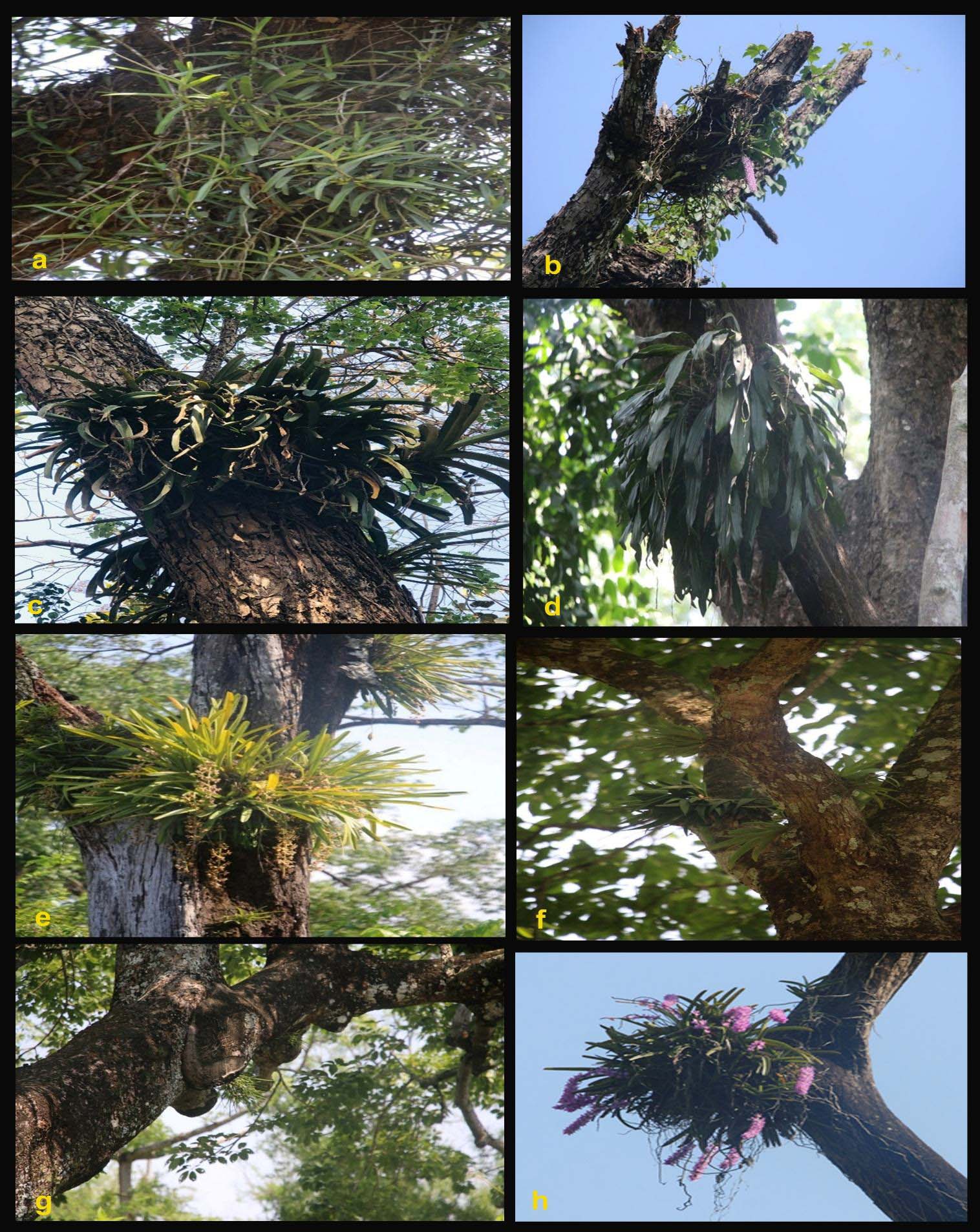
Ethno botanical information was collected through a household survey in the study area to document traditional uses of orchid species. The findings revealed a rich diversity of orchids utilized by local communities for medicinal purposes. The study recorded a total of 14 species under 10 genera, among which 42% were used as medicinal, 33% were reported of uses, and 25% had no awareness of the uses of orchid species in the study area. Out of the recorded Orchids species 37% were used to stop bleeding of sudden cuts, 27% for digestive issues, and 18% for fever (Table 1).
Orchids used as medicinal purpose
The survey of 60 households showed mixed views on orchid’s medicinal use: 42% responded “Yes” for its use, 33% answered “No” for any application, and 25% were unknown. This indicates that while many recognize medicinal value, a significant portion either disagrees or lacks awareness.
Orchid’s ailment used to treat
Ethno botanical surveys revealed that orchids are traditionally used to treat diverse ailments. The majority of uses were for wounds and cuts (37%), followed by digestive disorders (27%) and fever-related conditions (18%). Other reported uses included treatment of skin diseases, rheumatism, muscular pain, bone fractures, eye problems, and possible anti-bacterial effects, while 15% remained unknown.
The household survey highlighted diverse preparation methods of medicinal orchids. The most common practice was crushing plant parts into a paste for direct application, followed by preparing decoctions or tea, drying and using in powder form, and extracting juice. In several cases, however, the specific mode of preparation was not known, reflecting gaps in the transmission of ethno botanical knowledge.
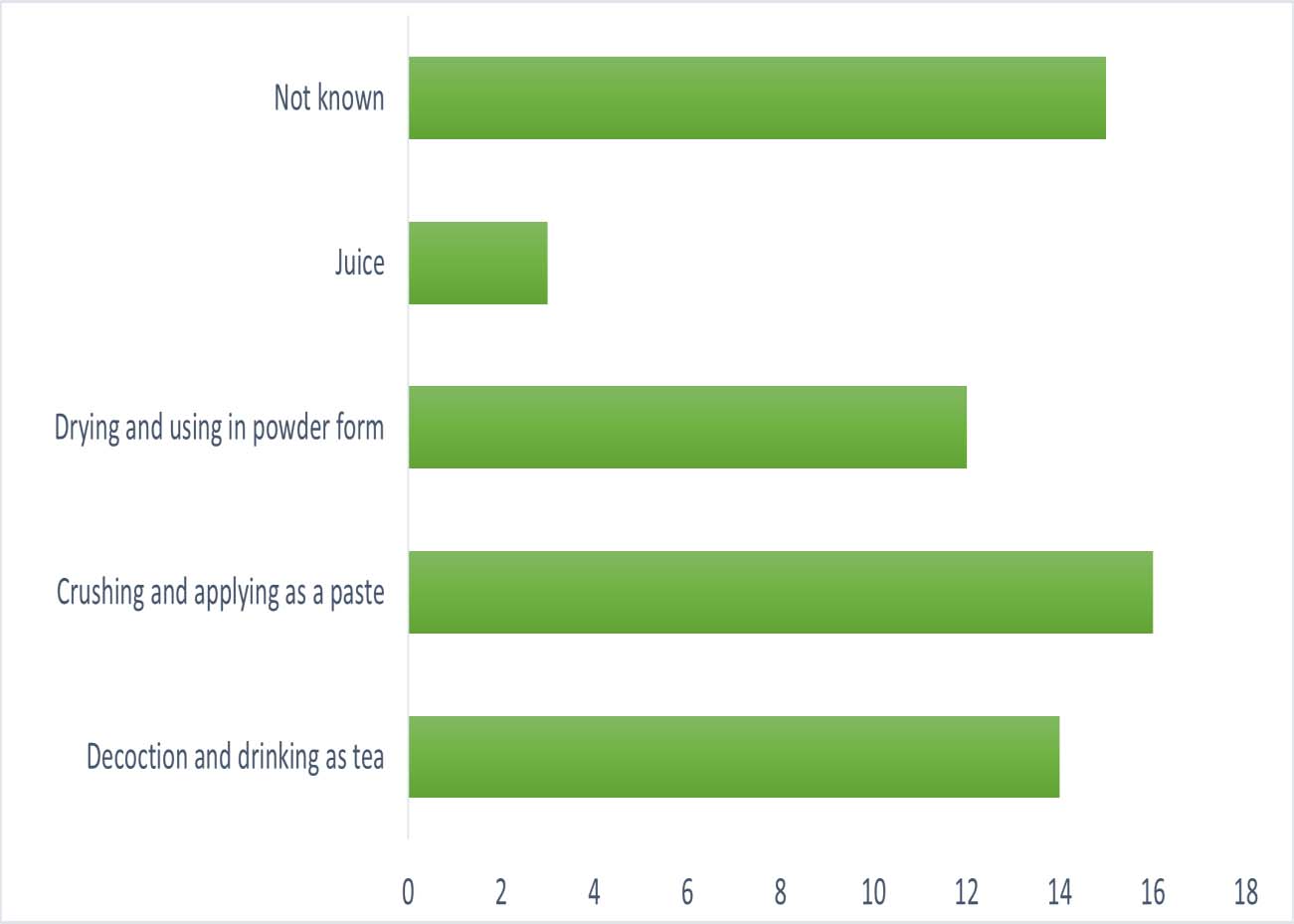
Table 1. Ethno botanical uses of orchid species
| SL. No. | Orchid species | Parts used | Mode of uses | Ailments |
|---|---|---|---|---|
| 1. | Acampe praemorsa (Roxb.) Blatt. & McCann |
Root | Decoction, Paste | Rheumatism |
| 2. | Aerides multiflora Roxb. | Leaf | Leaf Paste (External) | Anti-bacterial properties |
| 3. | Aerides odorata Lour. | Leaf | Leaf Paste (External) | Anti-bacterial properties |
| 4. | Coelogyne imbricate (Lindl.) Rchb.f. |
Pseudobulbs, Leaves (rarely) |
Pseudobulb Paste (External), Decoction | Headache, Joint pain or body ache, Fever |
| 5. | Coelogyne pallida (Lindl.) Rchb.f |
Pseudobulbs, Leaves (rarely) |
Pseudobulb Paste (External), Decoction | Headache, Joint pain or body ache, Fever |
| 6. | Cymbidium aloifolium (L.) Sw. |
Rhizome and root | Paste from Rhizome and root | Fracture and dislocated bones. |
| 7. | Cymbidium bicolor Lindl. |
Whole part |
Root Paste (External), Poultice (Whole Plant or Root-Based) |
Rheumatism, Bone fractures, Cuts and wounds |
| 8. | Dendrobium sp. | Stem, leaves, whole parts | Paste, Poultice, Juice, Powder, Decoction | Digestive disorder, eye ailments, fever, Body pain and muscular ache |
| 9. | Luisia trichorhiza (Hook.) Blume. |
Leaves | Leaves paste | Muscular pain |
| 10. | Oberonia sp. | Whole parts | Paste, Poultice, Decoction, Juice | Skin diseases, Wound and cuts |
| 11. | Pinelia spicata (D. Don) S.C. Chen & J.J. Wood. |
Stem | Stem paste | To reduce stomachache, headache |
| 12. | Rhynchostylis retusa (L.) Blume. |
Leaves, Root | Root juice, Leaves paste | Rheumatism, Applied to cuts & wounds |
| 13. | Smitinandia micrantha (Lindl.) Holtt. |
Root, Stem | Root powder, Stem Poultice, Decoction | Fever |
| 14. | Vanda sp. | Root | Root Paste (External) | Rheumatism, allied disorder |
Discussion
Various orchids parts such as roots, leaves, pseudo bulbs, and entire plants were reported for medicinal use, depending on the species. These parts were prepared in diverse ways, including paste, decoction, powder, and juice, reflecting deep-rooted traditional practices. Acampe praemorsa, Smitinandia micrantha, and Coelogyne pallida were frequently cited for decoctions, while Dendrobium spp. and Oberonia spp. had multiple usage forms, confirming their broad ethno-pharmacological applications. These findings corroborate those of (Vaidya and B N, 2019), who reported that over 94 orchid species in Nepal are used to treat ailments such as fever, wounds, digestive problems, and body aches.
Conclusion
The present study listed a total of 14 orchid species, all of which are used for ethnobotanical Application. In the survey, a total of 60 households were participated. Among them, 42% acknowledged the medicinal value of orchids, 33% reported not using them, and 25% had no awareness of their uses. Orchids were most commonly utilized to treat wounds and cuts 37%, digestive issues 27%, and fever 18%. They were also used for managing skin ailments, muscle pain, bone fractures, joint pain, and eye-related problems. The most repeatedly used parts were roots, followed by leaves, pseudobulbs, whole plants, and stems. Common preparation techniques included making pastes, decoctions, powders, and extracting juice.
Declaration
Conflict of Interest: The authors declare that they have no conflict of interest.
References
- Chand, M. B., Paudel, M. R. and Pant, B. (2016). The antioxidant activity of selected wild orchids of Nepal. Journal of Coastal Life Medicine, 4(9): 731-736.
- Devkota, H. P., Logesh, R., Adhikari-Devkota, A. and Paudel, M. R. (2022). Orchids of Genus Betilla: Traditional Uses, Phytochemistry, Bioactivities, and Commercial Importance. In Orchids Phytochemistry, Biology and Horticulture: Fundamentals and Applications 573-590 Cham: Springer International Publishing.
- Joshi, P. R., Joshi, S., Paudel, M. R. and Pant, B. (2023). Screening of In vitro α-amylase Inhibitory Activity of Wild Orchids of Nepal. Journal of Nepal Biotechnology Association, 4(1): 1-7.
- Kumar, P. S., Subramoniam, A. and Pushpangadan, P. (2000). Aphrodisiac activity of Vanda tessellata (Roxb.) Hook. ex Don extract in male mice. Indian Journal of Pharmacology, 32(5): 300-304.
- Ng, T. B., Liu, J., Wong, J. H., Ye, X., Wing Sze, S. C., Tong, Y. and Zhang, K. Y. (2012). Review of research on Dendrobium, a prized folk medicine. Applied microbiology and biotechnology, 93: 1795-1803.
- Pant, B. and Raskoti, B.B. (2013). Medicinal Orchids of Nepal. Himalayan Map House Pvt. Ltd. Our Nature 8, 82–91. https://doi.org/10.3126/on.v8i1.4315
- Pant, B., Chand, K., Paudel, M. R., Joshi, P. R., Thapa, B. B., Park, S. and Rajbhandari, P. (2022). Micropropagation, antioxidant and anticancer activity of pineapple orchid: Dendrobium densiflorum Lindl. Journal of Plant Biochemistry and Biotechnology, 1-11.
- Pun, U. and Thapa, F. (1996). A partial survey of orchids in the foothills of Chitwan and Nawalparasi districts of Nepal. Banko Janakari, 6, 79-81.
- Rajbhandari, K.R. & Dahal, S. (2004). Orchids of Nepal: A Checklist. Botanica Orientalis, Journal of Plant Science. Central Department of Botany, T.U., Nepal.
- Rajbhandary, K.R., Bhattarai, S. & Joshi, R. (2000). Orchid diversity of Nepal and conservation need. Proceedings of the 8th International Workshop of BIO-REFOR., Kathmandu, Nepal, November 28-December 2, 1999, BIO-REFOR, Japan. 249-252.
- Shimura, K., Okada, A., Okada, K., Jikumaru, Y., Ko, K. W., Toyomasu, T. & Yamane, H. (2007). Identification of a biosynthetic gene cluster in rice for momilactones. Journal of Biological Chemistry, 282(47): 34013-34018.
- Vaidya, B. N. (2019). Nepal: a global hotspot for medicinal orchids. Medicinal Plants: From Farm to Pharmacy, 35-80.
- CITES (2021, February 14). CITES Appendices I, II and III, valid from 14.02.2021. Retrieved from https://cites.org/sites/default/files/eng/app/2021/E_Appendices-2021-02-14
**************